Vilnius has no single, uniform aesthetic, and that may be precisely its strength. A conversation with fashion journalist and semiotics-trained Deimantė Bulbenkaitė, who explores the city’s evolving fashion identity, its emerging creative voices, and the cultural influences woven into the way locals dress.
VP: Let’s start with you. Can you tell us about your journey into fashion and the experiences that have shaped your career?
Deimantė: Fashion has been an integral part of my life for nearly two decades. For many of us in this region, the primary portal into the professional fashion realm—think fashion weeks and haute couture shows—was television, specifically Fashion TV.
I vividly recall a defining moment in autumn 2006. I was thirteen years old, returning home from school for lunch, when I turned on the TV for some background noise. Fashion TV was broadcasting live from Milan Fashion Week—specifically, Dolce & Gabbana’s Spring / Summer 2007 collection. Younger readers might want to know that back then, live internet streaming had not yet become the standard; television alone provided that immediate window into the international runway.
I was captivated by what I saw, but even more so by what I couldn’t yet comprehend: Who wears these futuristic creations? Why are the models pacing against the rhythm of the soundtrack? How do these separate garments share a cohesive aesthetic link? The next day, I went to the school library to research Milan Fashion Week, the design duo Dolce & Gabbana, and runway presentations online. I was instantly hooked. By 2007, I had founded Spintos guru, Lithuania’s first fashion blog.
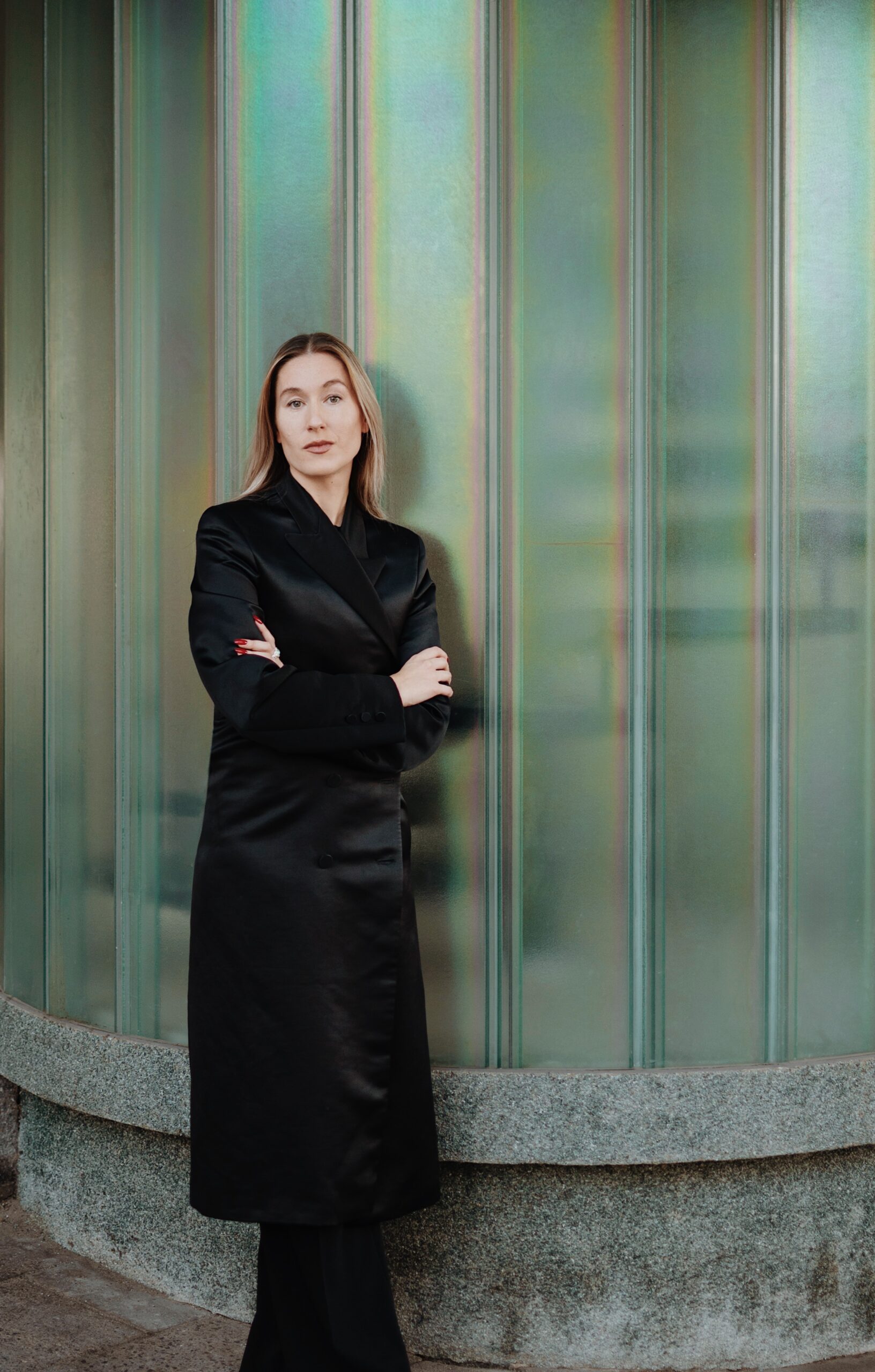
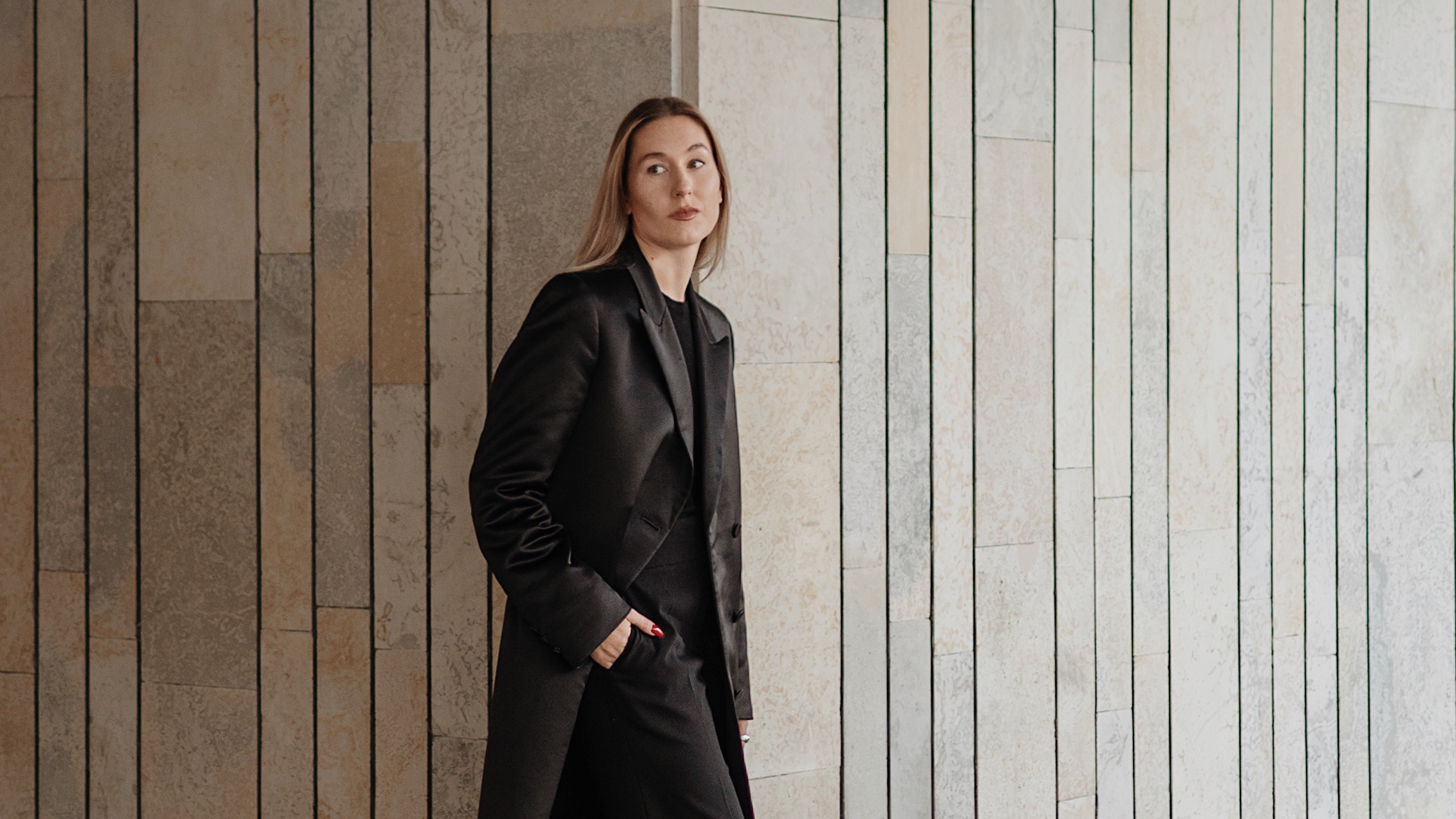
My dialogue with fashion has continued since then. Naturally, the career path has taken many directions: from writing about luxury industries and interviewing prominent European and Lithuanian creatives, to hosting Tendencingai on LRT Klasika. During the pandemic, I launched an educational Instagram series titled The Curious History of Fashion, dissecting how garment culture intersects with politics, economics, sociology, and the arts. With a background in semiotics, I strive to approach fashion not merely as an aesthetic surface, but as a rich cultural language. Turning this teenage ambition into my daily profession is extremely rewarding.
VP: How would you describe the fashion identity of Vilnius today?
Deimantė: I often hesitate to categorise a city’s style into neat definitions. We inhabit a globally connected visual culture shaped by shared social media algorithms, synchronised references, and trends that reach Vilnius, Paris, Dublin, and Helsinki at the same time. I’d also like to note that the historical concept of a singular “monoculture” has fragmented into diverse niche subcultures and hyper-individualised aesthetics.
Pinpointing a certain “Vilnius style” is an oversimplification. What is remarkable, however, is witnessing Vilnius evolve into a liberal and visually eclectic capital. I especially like how we are gradually rethinking conventions and traditional dress codes defined by age, gender, body type, and the like. Vilnius has evolved into a cosmopolitan city characterised not by a single, uniform aesthetic but by thousands of individual voices—an infinitely more valuable quality.
VP: How much of Lithuania’s history and cultural identity can be seen in the way people dress today?
Deimantė: There is often an external expectation to frame our aesthetic through the lens of post-Soviet nostalgia, but as a fashion journalist, I find this narrative to be reductive. My creative peers and I, along with emerging design voices, were born and raised in an independent Lithuania, shaped by global connectivity and digital culture. Limiting our cultural discourse to past geopolitical trauma is inaccurate.
What genuinely wows me is the younger generation’s revival of ethnoculture and traditional craft. Techniques once considered rustic—crochet, chunky cable-knits, traditional weaving motifs integrated into contemporary tailoring—are being recontextualised and were widely discovered during the pandemic when most of us had too much free time on our hands. Emerging designers are now often collaborating with local artisans, translating this beautiful traditional heritage into a progressive design language.
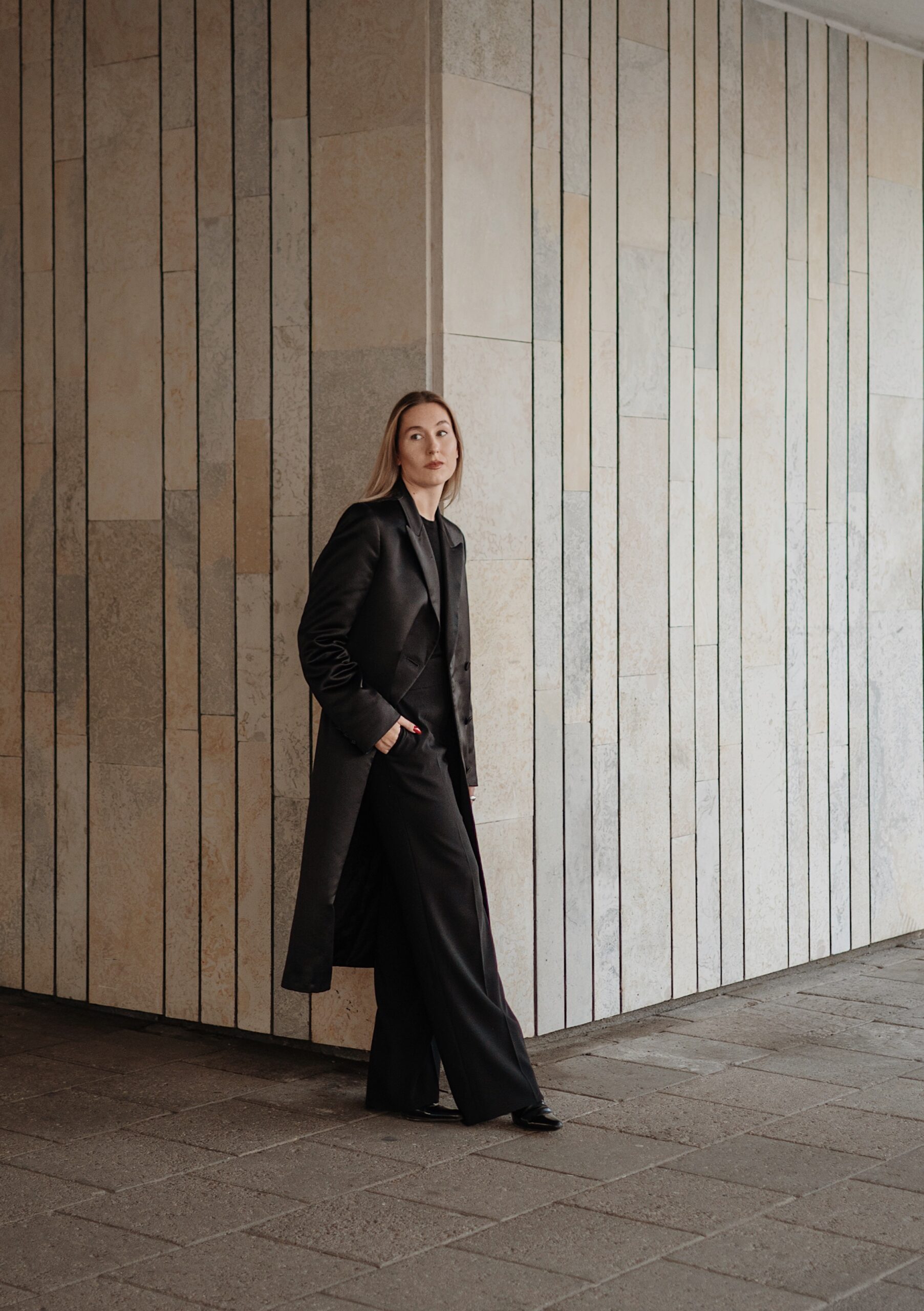
VP: If you had to capture the style of Vilnius locals in three words, what would they be and why?
Deimantė:
Warmth: Shaped by our shifting climate, I do believe that we have mastered functional layering. There is an innate understanding that physical comfort and practicality do not have to compromise refinement.
Receptivity: The city’s youth and fashion community exhibit extraordinary responsiveness to contemporary currents—seamlessly intertwining micro-trends from digital platforms with macro-movements in international fashion.
Restraint: Frequently mistaken for reserve, this quality signals pragmatism. It shows in our love of a dark, monochromatic palette and versatile garments designed for longevity—a strong counterpoint to fast fashion.
VP: Every city has its style-setters. Who are your five Lithuanian fashion influencers or tastemakers to watch?
Deimantė:
An icon of Lithuanian fashion and effortless elegance. Having developed her eponymous label for over three decades, she remains the ultimate muse and the finest ambassador of her own aesthetic.
A long-time friend and an OG of the local fashion blogging scene. Kristė has always cultivated a singular personal style, masterfully combining rare, artsy vintage gems with pieces by emerging designers. While others chase trends, Kristė has always remained unapologetically, authentically herself.
I have long considered Mantas one of the most impeccably dressed people in Vilnius—he embodies the art of sprezzatura, looking effortlessly put together. Primarily a furniture designer with a curious mind and immaculate taste, he also holds a special place in my life: after years of friendship, we recently discovered that we are actually related.
4 –Aura More
I have always viewed drag as one of the most potent catalysts for fashion; it destabilises conventions and reveals the transformative power of dress. Aura More is a drag artist of refinement, drawing from the archives of fashion history and reinterpreting them through a subversive lens.
In all seriousness—I genuinely love his unapologetic flamboyance. The local social scene would be far less vibrant without his signature kaleidoscopic palette, statement brooches, and bold sartorial choices. I respect uncompromising individuality, and Žilvinas embodies it flawlessly.
VP: Which emerging designers deserve to be on the international radar?
Deimantė:
1 – URTE KAT
The girls at URTE KAT are rewriting the rulebook for young designers, guided by intuition and a close connection to their community. Their work strikes that rare balance between creative ready-to-wear and everyday accessibility—which explains why Dua Lipa and Rosalía go for their pieces.
2 – SSTKMS
Another favourite of mine. Conceived by Urtė Vosyliūtė and Kotryna Lipkevičiūtė, SSTKMS translates conceptual fashion into highly wearable daily staples, enriched with nostalgic references, unconventional volumes, and thoughtful construction.
3 – PREGES
Founded by Patricija Regesaitė, an alumna of Iris van Herpen in Amsterdam and Robert Wun in London, PREGES stands out for its structural precision. The brand beautifully blends complex tailoring and intricate detail with effortless bodily movement.
Deimantė: My philosophy rests on two foundational ideas:
A relationship with fashion does not have to be purely material; it can be intellectual. True appreciation of fashion is not synonymous with consumption. To me, it means cultural literacy and the ability to deconstruct visual symbolism without the necessity of owning certain objects. I prioritise intellectual engagement over so-called retail therapy.
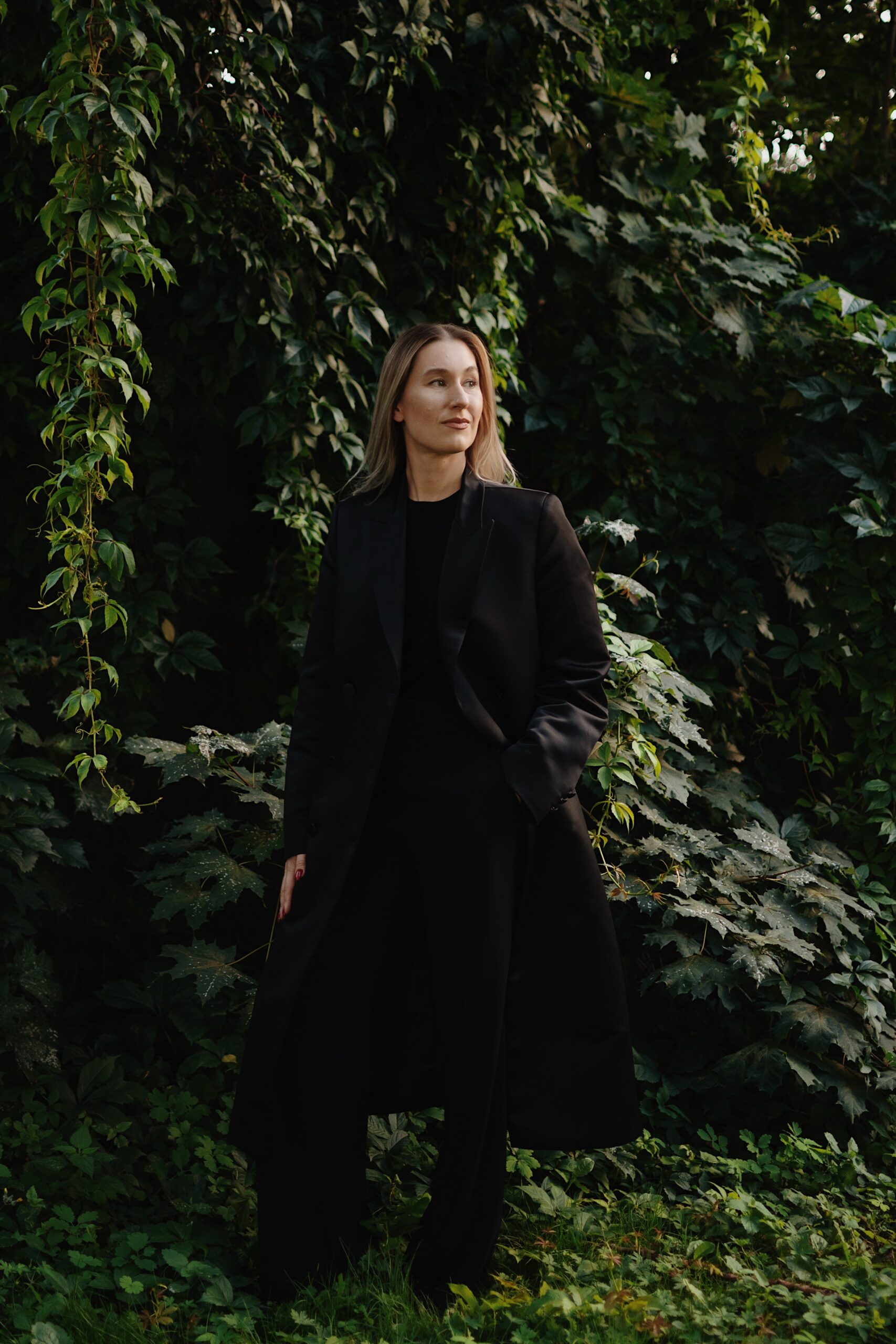
Cultivating a relationship with what we already own rather than what we desire to have. Contemporary consumerism constantly directs our focus toward the next purchase. However, true creativity lies in the reinterpretation of one’s existing wardrobe. Mine is predominantly black—an intentional choice designed to eliminate decision fatigue.
VP: Where do you look for inspiration?
Deimantė: I do not think that inspiration requires deliberate pursuit; it comes organically from observation. My training in semiotics enables me to instinctively recognise and decode cultural and visual elements in everyday life. Of course, visiting contemporary art museums, fashion retrospectives and reading literature on design history doesn’t hurt, either. In my free time, I love diving into academic and historical research rabbit holes, where an obscure detail often becomes the premise for an Instagram post or radio episode.
However, what I love most is the often-forgotten art of people-watching at an outdoor café—observing reality rather than an overly curated digital feed. I like to keep my grip on the real world and detach from the screen as much as possible.
VP: And finally, if you could give a visitor just one piece of advice for understanding Vilnius through fashion, what would it be?
Deimantė: Visit a café—such as Brew on Pylimo Street, adjacent to the MO Museum—take a seat, and simply observe the passersby for half an hour. The living rhythm of the city and the nuanced, unprompted styling of its residents will reveal far more about the spirit of Vilnius than any curated boutique or conventional gallery.
VP: Where can we find you in the digital sphere?
Deimantė: Online, you can find me on Instagram, read my Substack, listen to my radio show, or mix it all together.

 Loading...