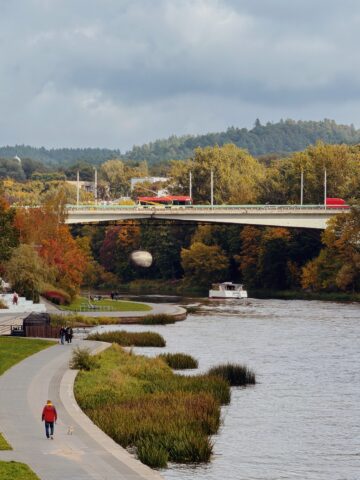
Antakalnis was once regarded, quite rightfully, as one of Vilnius’ most prestigious suburbs. During the Soviet period, however, the anonymous apartment blocks erected along Antakalnio Street nearly turned it into a long, cold, and monotonous corridor of concrete.
Yet only a few steps in either direction, deeper into the district and the contrast becomes striking, deeper into the district, for the contrast to become striking: grand residences, lush greenery, and countless hidden corners concealing stories from different eras.
This area is home to some of the city’s finest seventeenth-century palaces, forests reminiscent of the Swiss Alps, colourful springs, one of the most beautiful Baroque churches in Europe, and the oldest linden tree in Vilnius. The district also contains former prisons that bear witness to some of history’s most painful events, as well as three cemeteries where many of Lithuania’s distinguished cultural, political, and public figures are buried.
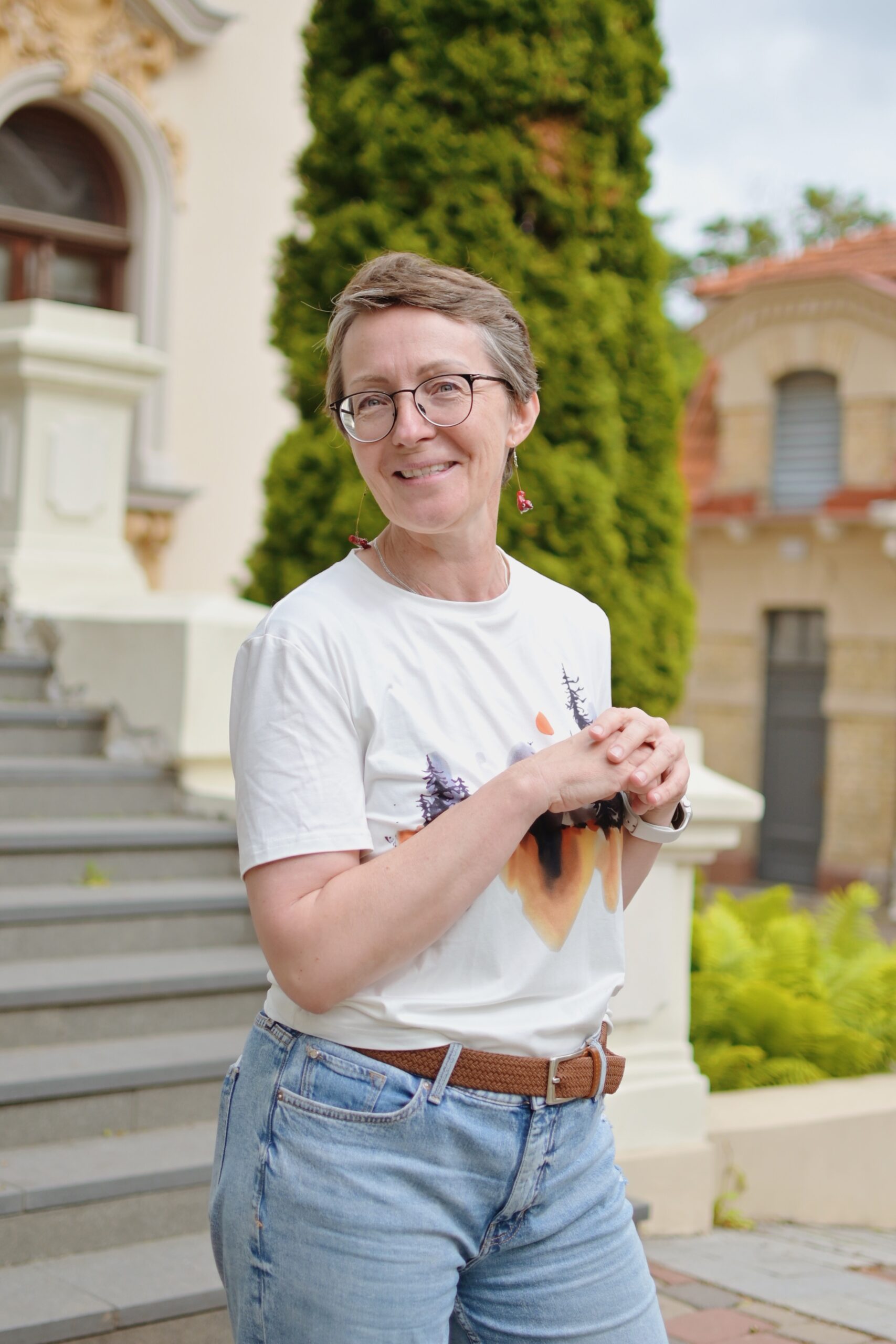
Explore this remarkable district, rich in history and layered with stories, alongside Dovile, a Vilnius-born local who shares her knowledge as she guides us through the city’s neighborhoods.
Vileišių Rūmai
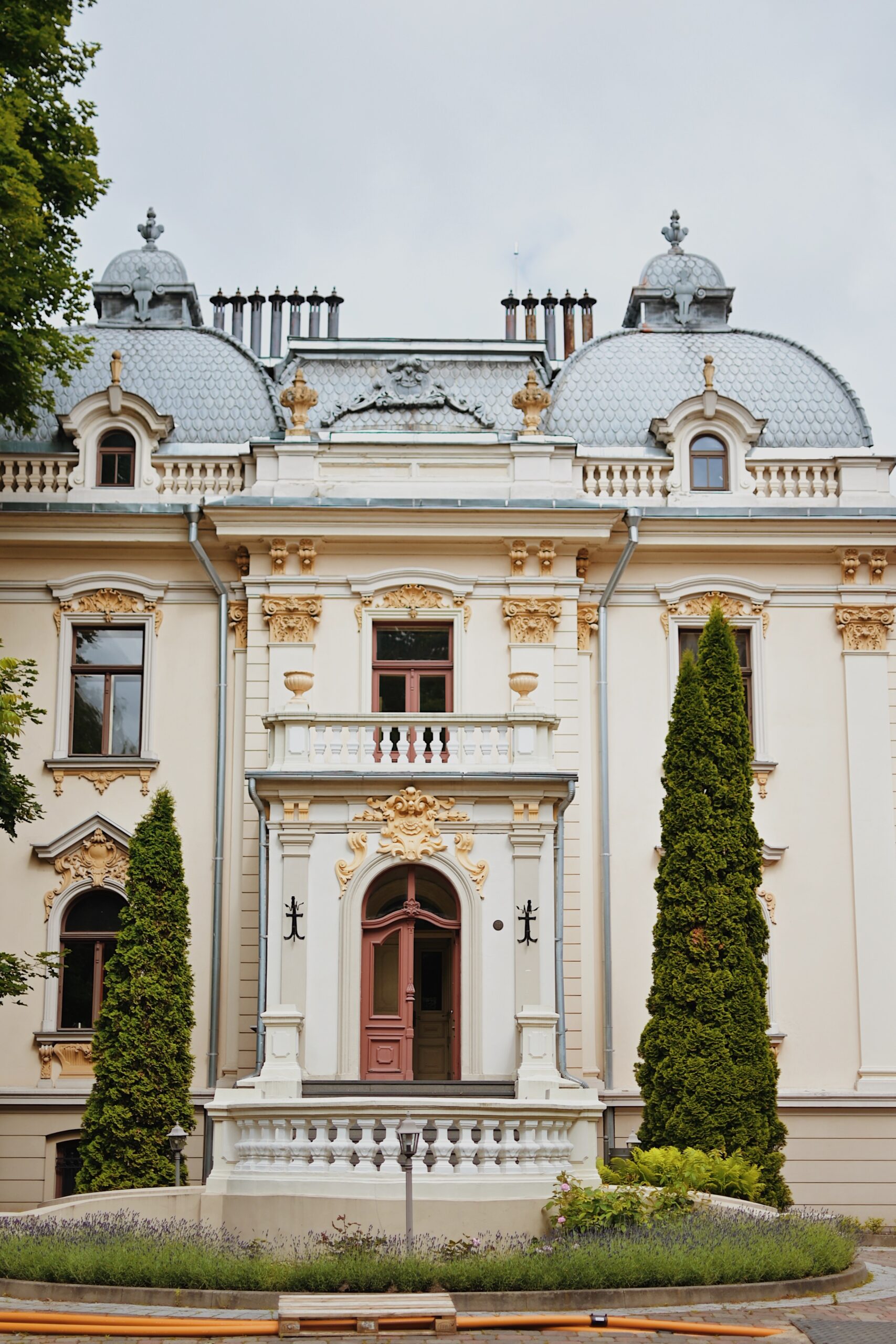
The Vileišis rūmai (palace) is much younger than the Sluškai Palace, yet it remains one of my favorite places in Vilnius. Today, it houses the Institute of Lithuanian Literature and Folklore, where the Lithuanian language—one of the oldest Indo-European languages—is studied and preserved. During the interwar period, the palace became a center of Lithuanian cultural life, dedicated to safeguarding the language and national identity amid political upheaval. For me, it stands as a powerful symbol of devotion to one’s country.
Petras Vileišis, the builder of the palace, came from the Pasvalys region in northern Lithuania. He was raised in a large, enlightened farming family. His brothers also became prominent figures in Lithuanian history: Jonas was a signatory of Lithuania’s 1918 Act of Independence, as well as a lawyer and mayor of Kaunas, while Antanas was a physician and philanthropist. The family fostered a deep love for Lithuania and a strong sense of duty to serve the nation.
Petras Vileišis studied at the Institute of Transport Engineers in St. Petersburg, then the capital of the Russian Empire, and became a distinguished engineer specializing in bridges and railways. His work on the Samara–Ufa railway earned him a state award. Yet alongside his engineering career, he pursued another mission: preserving Lithuanian identity. He supported the banned Lithuanian press, translated books, wrote textbooks, and took part in clandestine cultural activities.
Having earned sufficient means, Vileišis returned to Vilnius in 1898 with his wife and five children. He established the Vilija metalworks, which produced structures for important city buildings, including the Hales Market. His most ambitious project, however, was the construction of a cultural center for the Lithuanian nation.
Between 1904 and 1906, a three-building ensemble emerged in Antakalnis: the main palace, the street house, and an auxiliary building. Vileišis personally oversaw every detail. The complex featured remarkably advanced technologies for its time, including water filtration systems, a kitchen lift, and electricity supplied by a generator imported from Belgium. Reinforced concrete, still a relatively new material in Europe at the time, was used throughout the construction.
The palace contained sixteen individually decorated rooms, heated by twenty-eight tiled stoves, thirteen of which survive today. Its interiors reflected a range of European styles, from Neo-Baroque to Lithuanian national motifs.
The project cost an enormous 25,000 rubles—equivalent to nearly three million euros today. The street house was intended from the outset for public use, providing space for Lithuanian organizations, meetings, and a printing press.
In 1907, the building hosted the first Lithuanian art exhibition, featuring leading artists including M. K. Čiurlionis, Antanas Žmuidzinavičius, Petras Rimša, and Juozas Zikaras. The editorial office of Vilniaus žinios was based here, and discussions connected to the Great Seimas of Vilnius—the first national Lithuanian political assembly—also took place within its walls.
The construction transformed Antakalnis itself. Vileišis created an artificial terrace overlooking the Neris River, raised the embankment, and used excavated soil to fill nearby ravines, making way for two new streets. From the terrace, visitors once enjoyed views of the river and passing boats, now mostly hidden by mature trees.
Patriotic work came at a considerable personal cost. Vileišis lived in the palace for only two years before financial difficulties forced the family to leave for Russia. The buildings remained, and later became home to those devoted to Lithuanian culture.
One of them was the legendary librarian Pranas Razmukas. Arriving in Vilnius at the age of seventeen, he lived in the palace from 1932 until 2002, safeguarding some of Lithuania’s most important cultural archives, including the manuscripts and personal belongings of Jonas Basanavičius. In 1999, at the age of ninety-one, he revealed a hidden cache concealed within the building’s structure, containing documents of the Council of Lithuania, the archive of Marcelė Kubiliūtė, and other historical treasures—a remarkable discovery.
Razmukas also helped save the palace during the Second World War, persuading German soldiers not to destroy it.
Once, while I was leading a tour and speaking about Razmukas, a woman in the group suddenly stopped and said, “I cared for him.” Twenty-four years earlier, she had been a young nurse visiting this building to care for a frail older man. There was no doubt: it was Pranas Razmukas.
Sluškų Rūmai
Walking up Kosciuškos Street, we may not immediately notice one of Vilnius’s most impressive Baroque ensembles: the Sluškai Palace, set slightly back from the road on the left. In winter, however, when the city’s lush trees no longer obscure the view, its towering walls can be clearly seen from the opposite bank of the river.
This site has always been associated with grandeur. In 1690, Słuszka purchased the existing residence only to demolish it. He sought to create something unlike anything Vilnius had seen before: an Italian Mannerist residence surrounded by gardens, ponds, canals, exotic plants, balustrades, and even glass ceilings above which fish swam. Rumors claimed that naked maidens swam among them. Imagine it: the seventeenth century, with an aquarium suspended overhead. It is no surprise that European rulers visiting Vilnius chose to stay here.
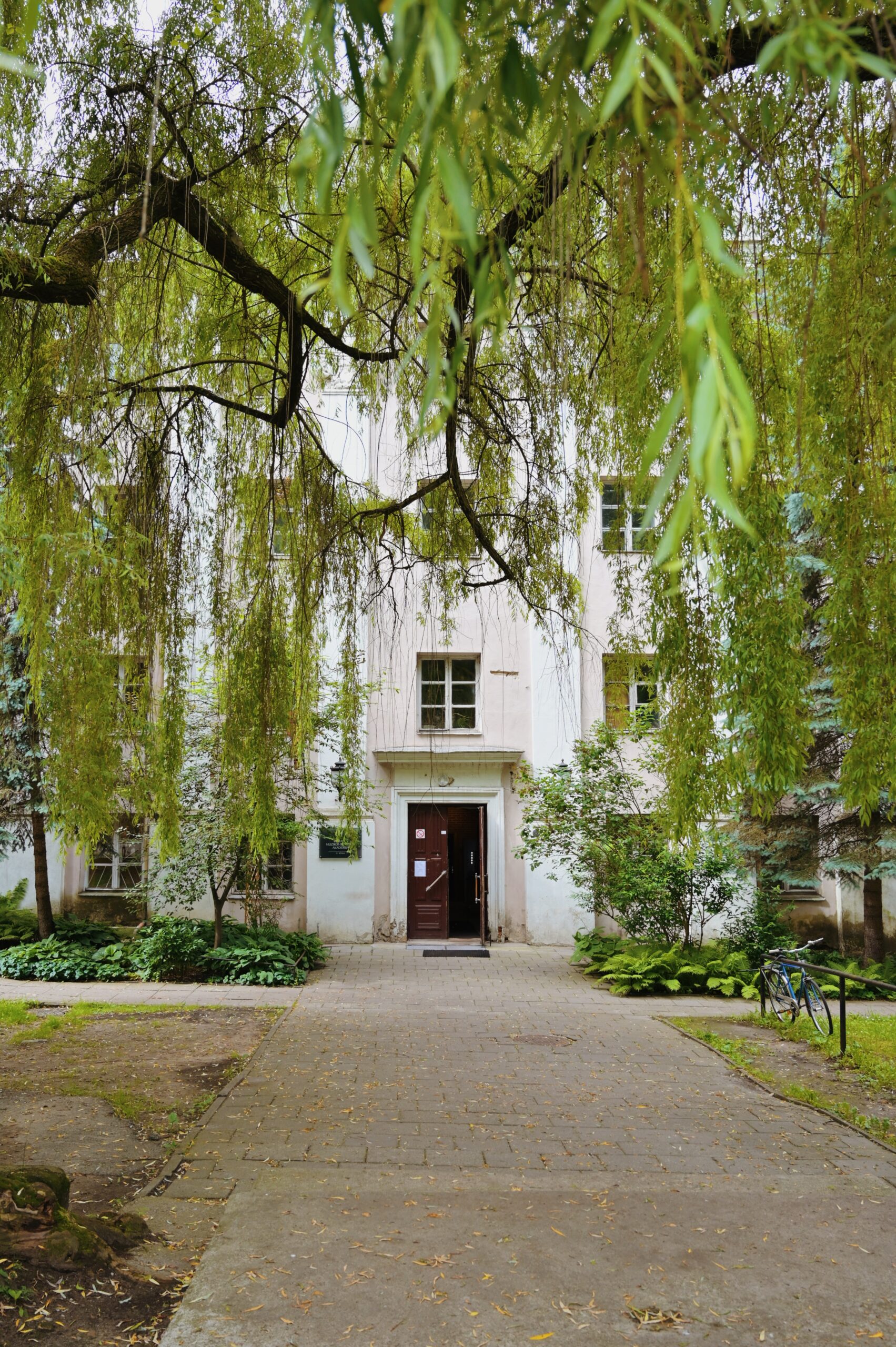
Yet Słuszka’s own life was turbulent, marked by lawsuits, debts, and gambling. He died impoverished and largely forgotten. After his death, the palace passed through many hands before being adapted for military use in the nineteenth century. It served as barracks, a military hospital, and warehouses, and in 1872, the complex became a penal prison. Later, it housed a polytechnic school, and since 2002, it has belonged to the Lithuanian Academy of Music and Theatre.
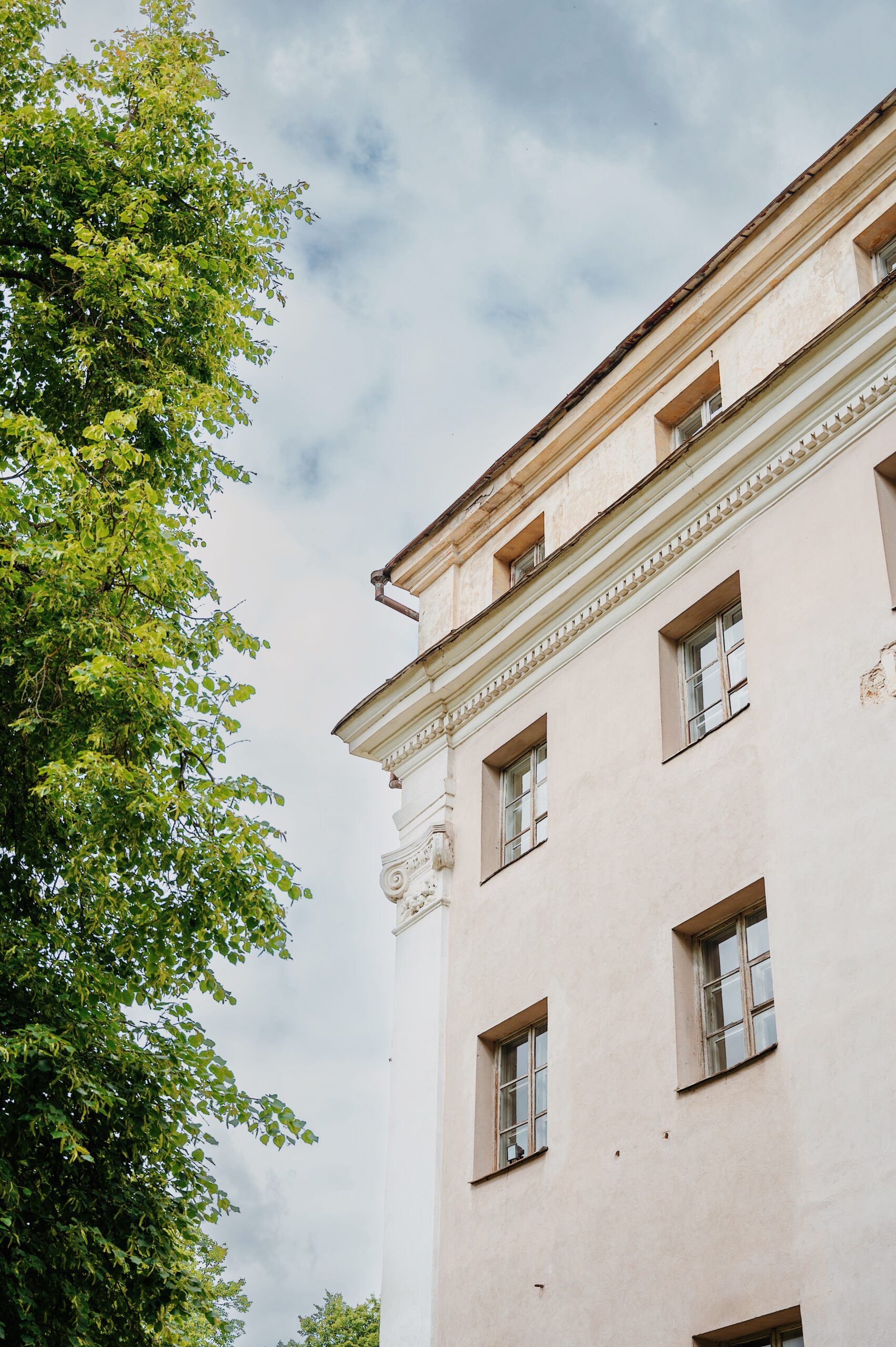
The original interiors have not survived, but the Słuszka coat of arms remains visible in the pediment, a reminder of the magnificence that once flourished here.
Church of St. Peter and St. Paul
As early as the time of Grand Duke Gediminas, this site was said to be home to a temple dedicated to Milda, the goddess of love. Later, a church was built here, and for a time the hill was known as Taurus Hill, after Albertas Tauras, who initiated its construction.
The true transformation of the site came in 1668, when Mykolas Kazimieras Pacas, Grand Hetman of Lithuania, decided to build a new church. Some say it was an offering of gratitude after the end of the war with Muscovy; others claim that Pacas had once found refuge with the Lateran canons while hiding from unpaid mercenary soldiers and wished to repay their kindness.
Pacas himself was buried directly beneath the church threshold. The hetman wished for his sinful body to be trampled by everyone entering the church. The stone bearing this request is now mounted above the entrance. One can still see how worn it became, its inscription almost erased by countless footsteps. One hundred and thirty-five years after his death, the Lateran canons, out of respect, transferred his remains to the church crypt and raised the stone so that it would no longer be trodden upon.
The Latin inscription reads:
“To God, the Best and Greatest. What time had consumed and destroyed, a grateful and indebted soul has restored. This monument above the earthly remains of the Most Illustrious and Noble Lord Michał Pac, Voivode of Vilnius and Grand Hetman of the Grand Duchy of Lithuania, who was once buried at the threshold of this magnificent church he built himself, was worn away by time and the feet of passersby. Yet no oblivion could erase the memory of his benefactions. One hundred and thirty-five years after his death, this monument to the guardian of the true faith, the most zealous defender of the fatherland, and their generous founder, so that his memory might remain blessed, was erected by the Regular Canons of the Lateran on the first day of August, in the Year of Our Lord 1808.”
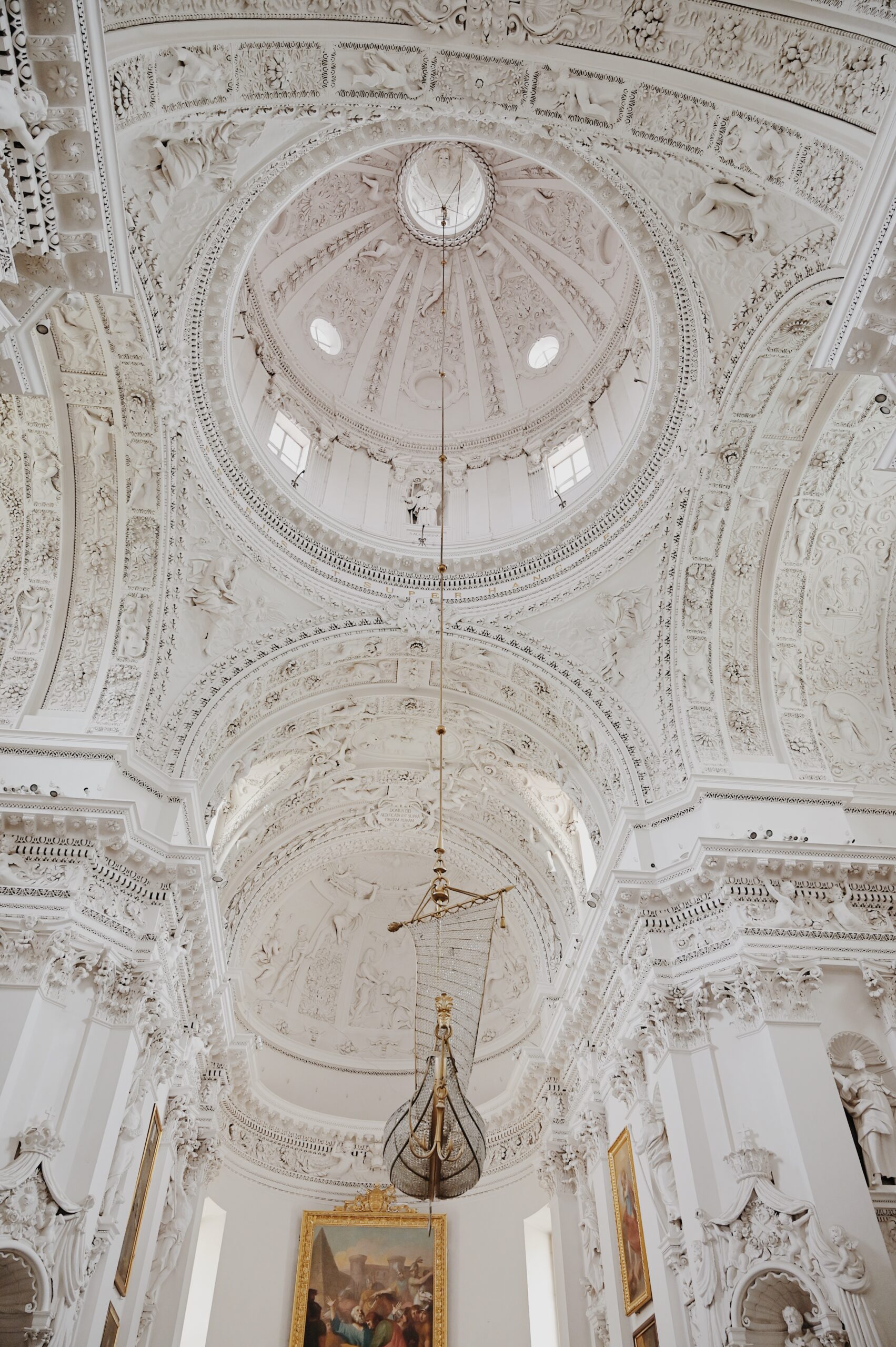
Whatever the motivation, the result exceeded all expectations. Although the exterior of the Church of St. Peter and St. Paul appears restrained, its interior reveals a true museum of the Baroque. Beginning in 1678, the Italian masters Pietro Perti and Giovanni Maria Galli created nearly two thousand stucco figures—angels, soldiers, saints, allegories, and dramatic scenes intended not merely to decorate, but to astonish, elevate, and strengthen faith. It is one of the most remarkable Baroque interiors in Eastern Europe.
Construction slowed following Pacas’s death in 1682, though the church was consecrated in 1701. Financial difficulties forced the sale of the original ornate wooden altar, which was replaced by a more modest painting by Pranciškus Smuglevičius. This contrast between the minimalist altar and the extraordinarily rich stucco decoration remains one of the church’s most striking features.
Be sure to look up at the magnificent ship-shaped chandelier suspended above the nave as well. And while walking through the church, try to find the elephant. The moment you see it, it becomes clear that the sculptor had only heard of an elephant, never actually seen one. It is one of the church’s most charming—and most difficult to find—details. Another curiosity is the pair of enormous Easter drums, which arrived in Europe from Muslim lands.
Behind the church, it is worth stepping into the courtyard of the former monastery—a quiet, enclosed, slightly mysterious space. Nearby, in John Paul II Square, an eighteenth-century Baroque chapel was reconstructed in 2024 after having been demolished during the Soviet period because it obstructed the construction of trolleybus lines.
Contributor: I am Dovilė, born and raised in Vilnius, where my lifelong fascination with the city began. As a child, I accompanied my father, an amateur guide, on his tours, which inspired my interest in the city’s history. After thirty years working as a graphic designer, I discovered video storytelling as a way to combine my interests in history, design, and storytelling. Today, I share the stories of Vilnius through historical facts, anecdotes, and legends, with a particular interest in the city’s neighborhoods and their evolution over time. Follow my stories and tours of Vilnius on Facebook or Patreon.
Contents

 Loading...