
Walking from the city centre across the King Mindaugas Bridge and over the river, we arrive in Žirmūnai—one of Vilnius’s earliest large Soviet-era residential districts, built on the right bank of the Neris.
Historical sources show that as early as the 16th century, a small street called Žirmūnai already existed in this area. It is believed that the name may have been brought by settlers who moved to Vilnius from the town of Žirmūnai in what is now Belarus.
For many years, older Vilnius residents continued to call the southern part of Žirmūnai Losiuvka (Łosiówka), after General Aleksandras Losovas. Following the 1863 uprising, he bought land here, and the name gradually took hold among residents.
From Žalgiris Stadium to a New City District
Continue along Rinktinės Street, and you will reach one of the most dramatically transformed places in Vilnius, the site of the former Žalgiris Stadium. Today, the area looks completely different. For almost a century, the stadium was one of the city’s most important centres for sport and culture. From Piromontas Stadium, which opened in 1922, to the Soviet-era Žalgiris complex, which hosted major football matches, sporting events and cultural gatherings, including events connected with Lithuania’s Song Festival.
After Lithuania regained its independence, the stadium became the city’s main venue for major music events. Bryan Adams, Pet Shop Boys, Sting, A-ha and many other internationally renowned artists performed here. The stadium was surrounded by a full sports complex with swimming pools, an ice rink, sports halls, and rowing facilities, making the area an important part of Vilnius’ sporting identity for decades. However, the stadium gradually fell into decline and closed in 2011. Its demolition began in the summer of 2016, marking a symbolic farewell to the Soviet sporting era and making way for a completely new look for the city.
At present, the site is home to Business Stadium, a modern business district designed as a city within a city. Planned with pedestrians in mind, the former stadium grounds have become a contemporary urban link between the city centre and Žirmūnai. Its centrepiece is Business Stadium Central, whose architectural concept was developed by Zaha Hadid Architects in collaboration with the Lithuanian studio Unitectus. Characterised by sweeping curves, glass surfaces and dynamic forms, the building brings a distinctly futuristic presence to the Vilnius skyline. Alongside it are Business Stadium West and Business Stadium North East, spacious office complexes housing international companies, technology and finance businesses, conference spaces and modern workplaces.
Business Stadium’s significance for Vilnius goes beyond economics. The district has transformed this part of the city, encouraged the renewal of the surrounding areas and created a new destination full of life. It is a striking example of how Vilnius is transforming former Soviet-era spaces into modern, open and lively urban districts designed for contemporary life.
The Past Beneath the Palace
The former sports complex was also home to the Palace of Culture and Sports, now known as the Vilnius Concert and Sports Palace. Standing by the Neris today, its monumental silhouette has an almost melancholic quality. It is difficult to imagine that this vast concrete structure was once one of Vilnius’ busiest venues for sport, culture and public life.
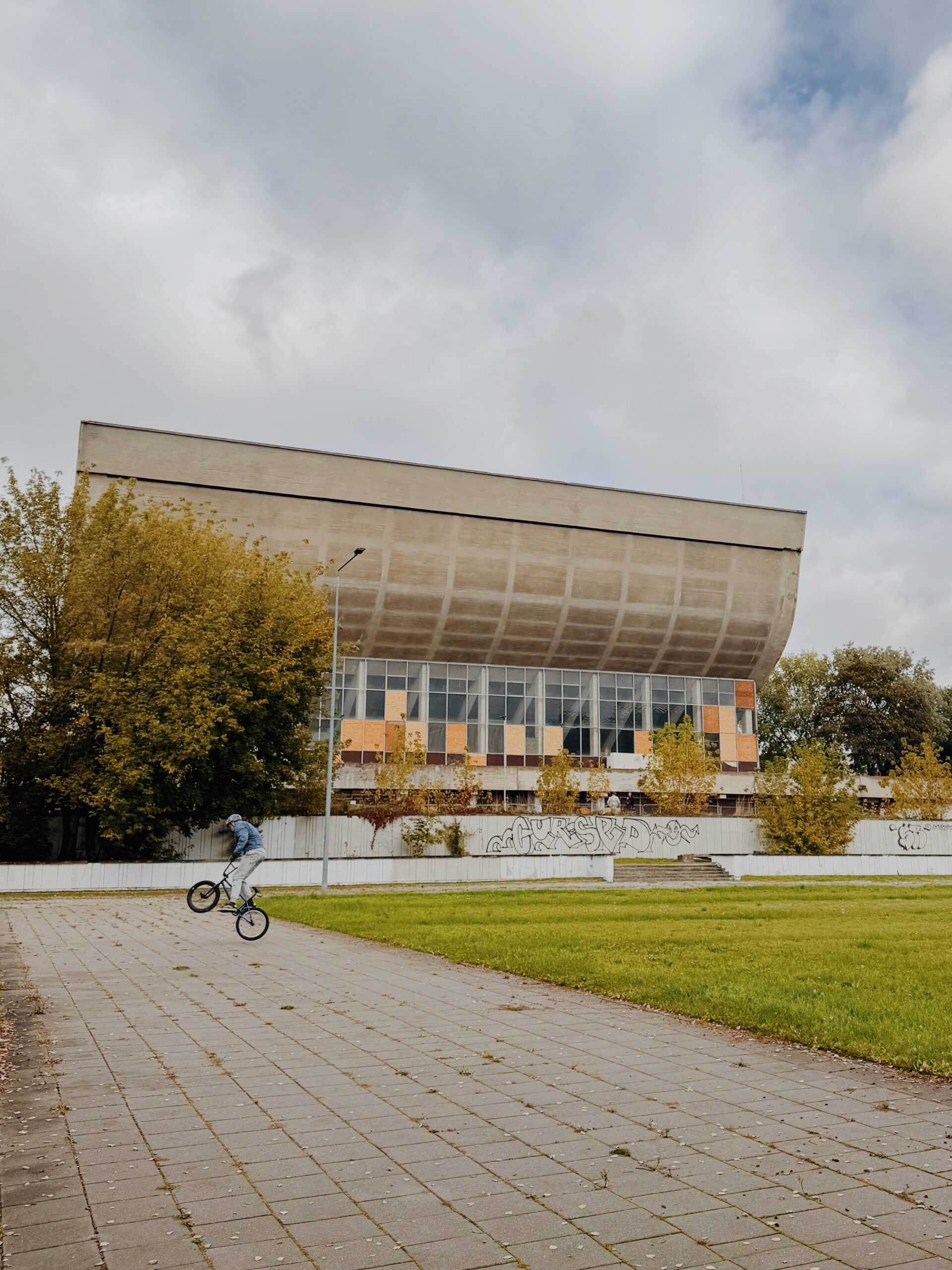
Designed in the late 1960s and opened in 1971, the palace was a confident statement of Soviet modernist architecture. Within its walls, sporting competitions gave way to concerts, festivals, exhibitions and political gatherings. Its most defining moment came on 22 and 23 October 1988, when the founding congress of Sąjūdis, the movement that helped lead Lithuania towards the restoration of independence, took place here.
Yet the building has always carried a more difficult history. It was built on the grounds of the former Jewish cemetery of Šnipiškės, one of the most important Jewish burial grounds in Vilnius, which had been desecrated and dismantled during the Soviet period. The palace’s future has therefore never been simply a question of architecture. It is also a question of memory, loss and responsibility.
After independence, the building slowly fell into disrepair. Its future remained uncertain for years, caught between proposals to restore it, demolish it or give the site an entirely new purpose. Plans are now being considered to transform it into the Vilnius Great Cemetery Memorial Complex.
It might be a quiet but significant transformation. A building once designed to project the confidence of a Soviet city is set to become a place to reflect on what was lost. Rather than hosting crowds and celebrations, its future spaces will invite visitors to pause and consider the many histories held within this small stretch of Vilnius.
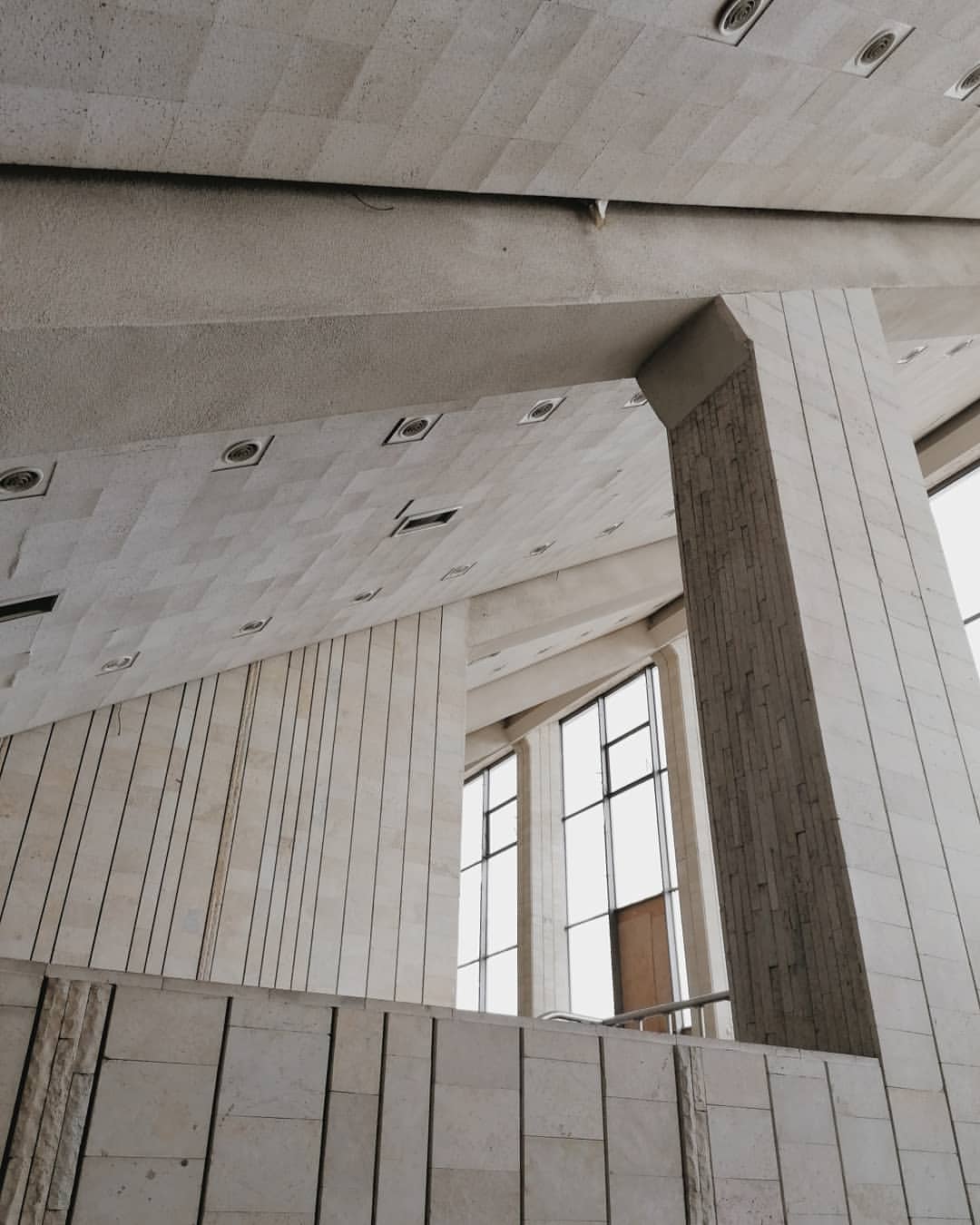
There is another tragedy connected to the site, one that Soviet authorities largely kept from public view. On 13 April 1975, after a concert, a crowd made its way towards a temporary pontoon bridge across the Neris. The unfinished and poorly secured bridge collapsed under the weight of the crowd, sending dozens of people into the freezing river. Four deaths were officially reported. Little was written about the disaster at the time. The bridge was dismantled soon afterwards and never rebuilt.
Bridges, Brutalism and Hidden Histories
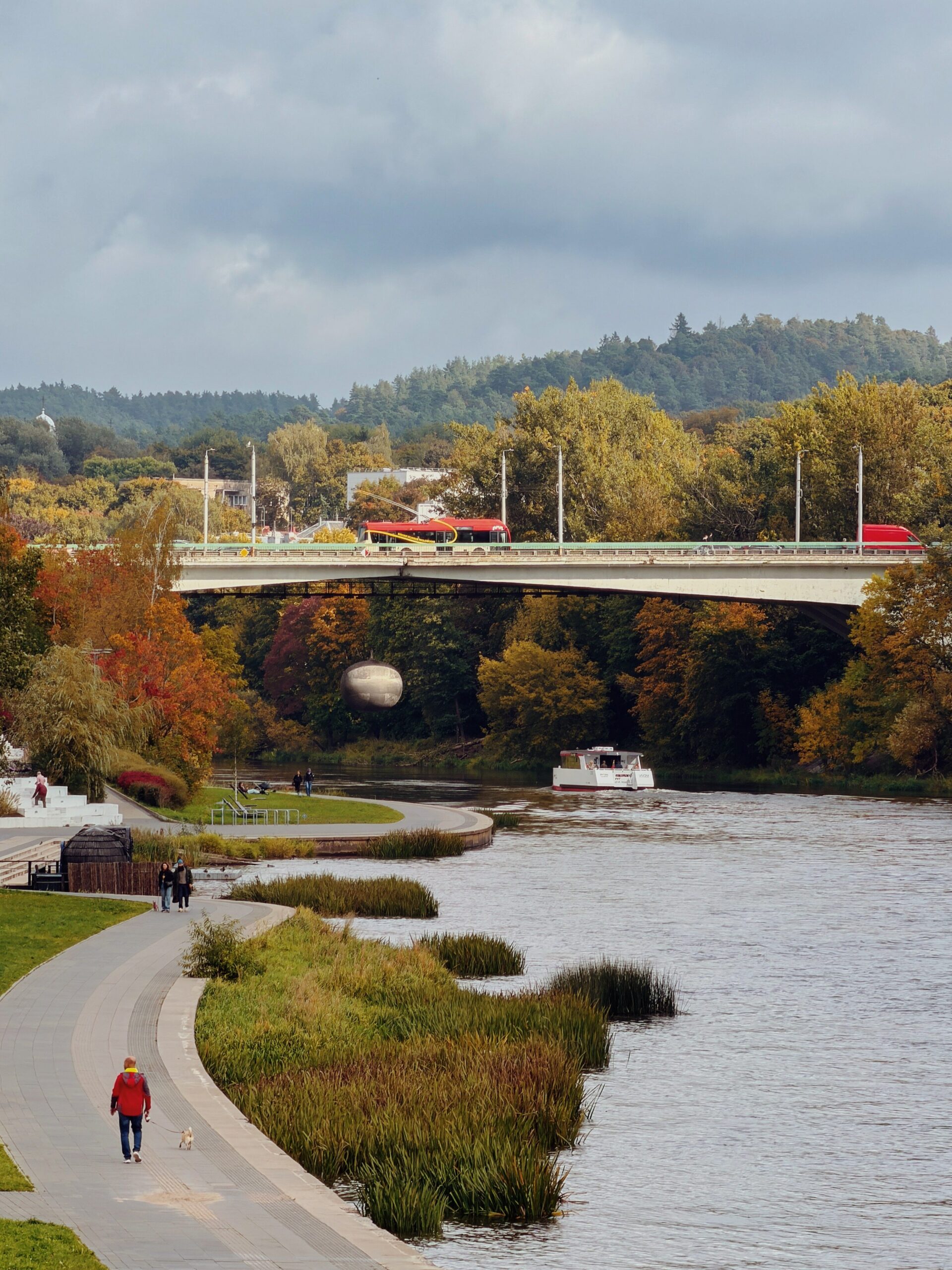
Continue along the river, and you’ll reach Žirmūnai Bridge. Built in 1965, it greatly improved connections with the city at a time when only two permanent bridges, Green Bridge and Žvėrynas Bridge, then known as Nikolai Bridge, linked the two banks of the Neris, alongside the temporary pontoon bridge mentioned earlier.
Look at Žirmūnai Bridge from below, and its structure can resemble a leaping animal, earning it the occasional nickname of the Dancing Deer. Another detail is easy to miss from street level. Hanging beneath the bridge is the Royal Apple, a metal sphere created by sculptor Kunotas Vildžiūnas in 2010 as a tribute to Vilnius and its history. It was originally intended for King Mindaugas Bridge, but its architect objected, arguing that the bridge itself was already a work of art. The apple eventually found its place beneath Žirmūnai Bridge instead.
Nearby stands the Palace of Culture and Sports of the Ministry of the Interior, one of the more ambitious Soviet-era projects in Vilnius. Built in the 1980s, when Šnipiškės was still a patchwork of wooden houses, narrow streets and remnants of old cemeteries, the complex was designed to stand apart from its surroundings, close to the city centre yet almost fortress-like in its scale and presence.
Designed in the Brutalist style by architect Antanas Mačiulis, the building is heavy, angular and defined by broad concrete surfaces and long horizontal lines. It took eight years to build, with material shortages and prison labour contributing to the lengthy and complicated construction. The complex was divided into two parts, one for cultural events and administration, the other for sport. Its imposing interiors later appeared in the acclaimed television series Chernobyl.
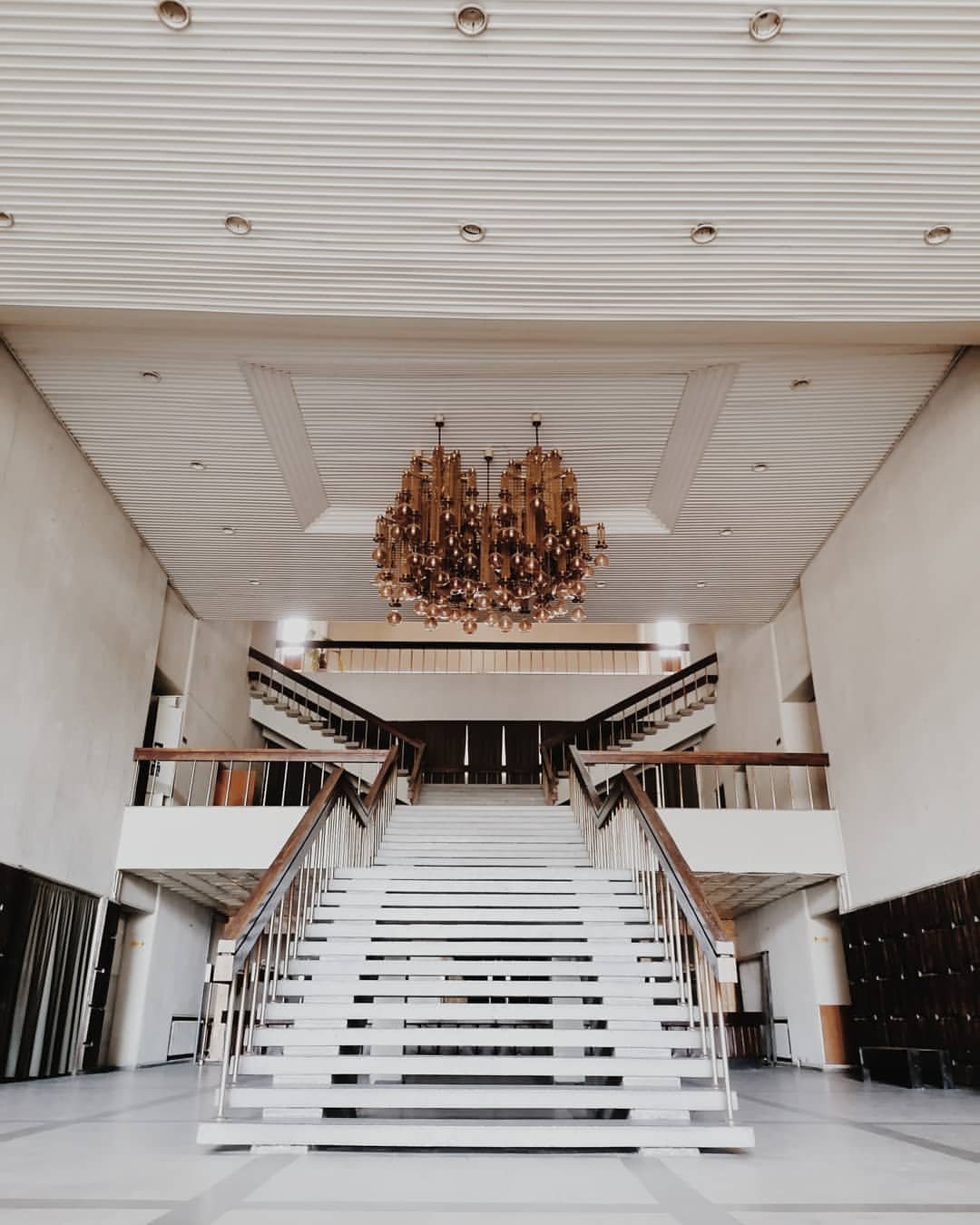
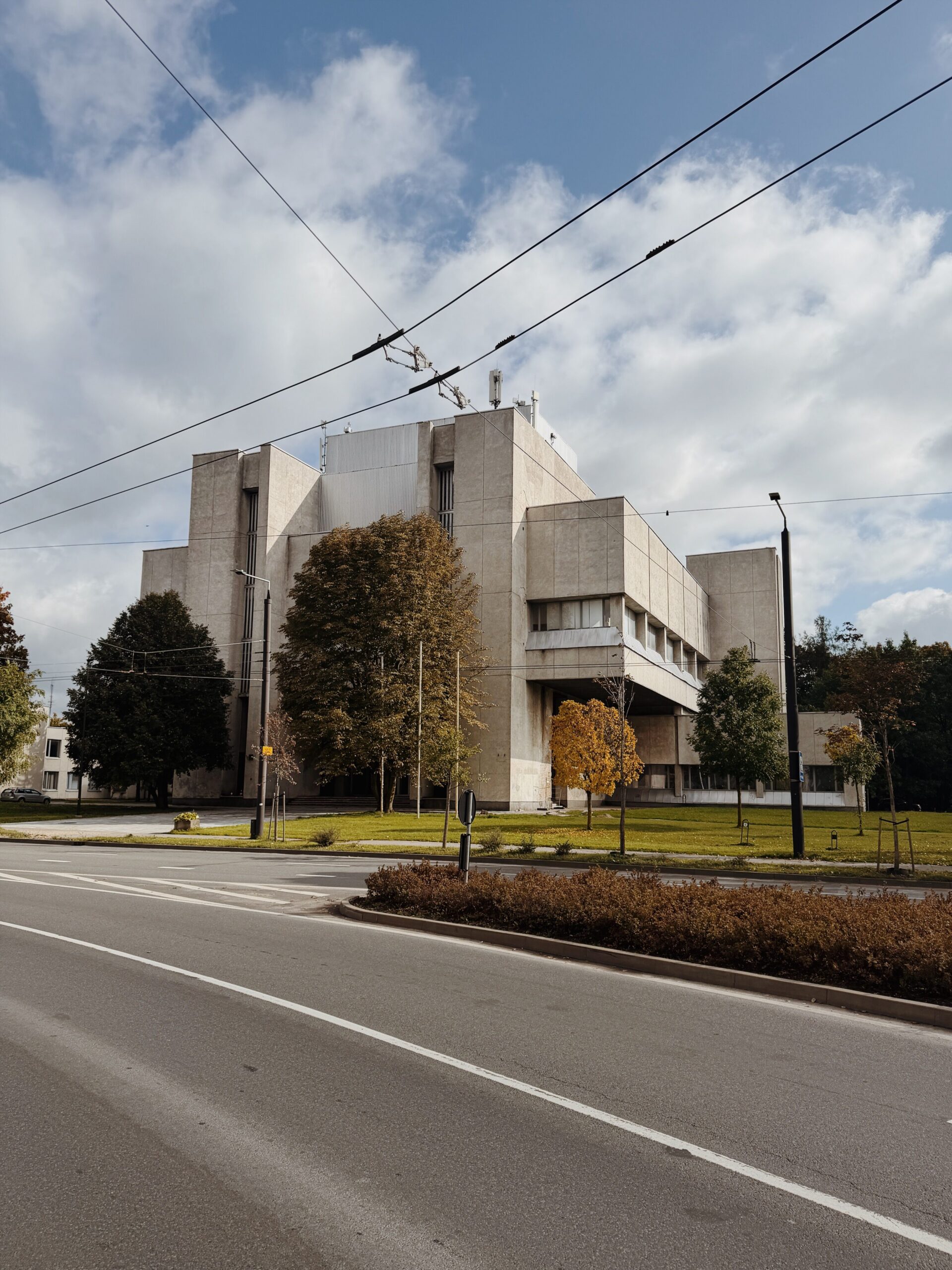
Today, the building stands amid the rapidly changing skyline of Šnipiškės. Glass towers and new business districts have risen around it, while the palace remains almost frozen in another era. Its severe concrete presence contrasts sharply with the lighter, more polished architecture of contemporary Vilnius. The building is still used for administrative purposes, although its future has long been debated. Some proposals call for its reconstruction and conversion to new public uses, while others argue that it should be preserved as a rare example of Brutalist architecture in Vilnius.
The land beside it holds a very different story. As a child, I often walked past this area with my father. It was always hidden behind a high fence, and he would vaguely suggest that something dark had happened there. Only much later did we learn what had really been concealed.
At first glance, it appears to be a peaceful and well-kept park, with a manor house, a memorial, and flowering trees. But beneath that calm surface lies a painful and complex history, one that remained hidden for decades and is only now becoming an important part of Vilnius’s collective memory.
What Lies Beneath Tuskulėnai
Tuskulėnai Manor has a history of its own. The estate was established in the 16th century as a supporting farm for the castles of Vilnius and was later owned by several prominent Lithuanian families, including the Tyzenhauz, Pac and Valavičius families. In the 18th century, it passed into the hands of monks, who named it Tuskulėnai after Cicero’s Tusculan Disputations. During the Second World War, the manor also became a place where Jewish people were hidden and saved.
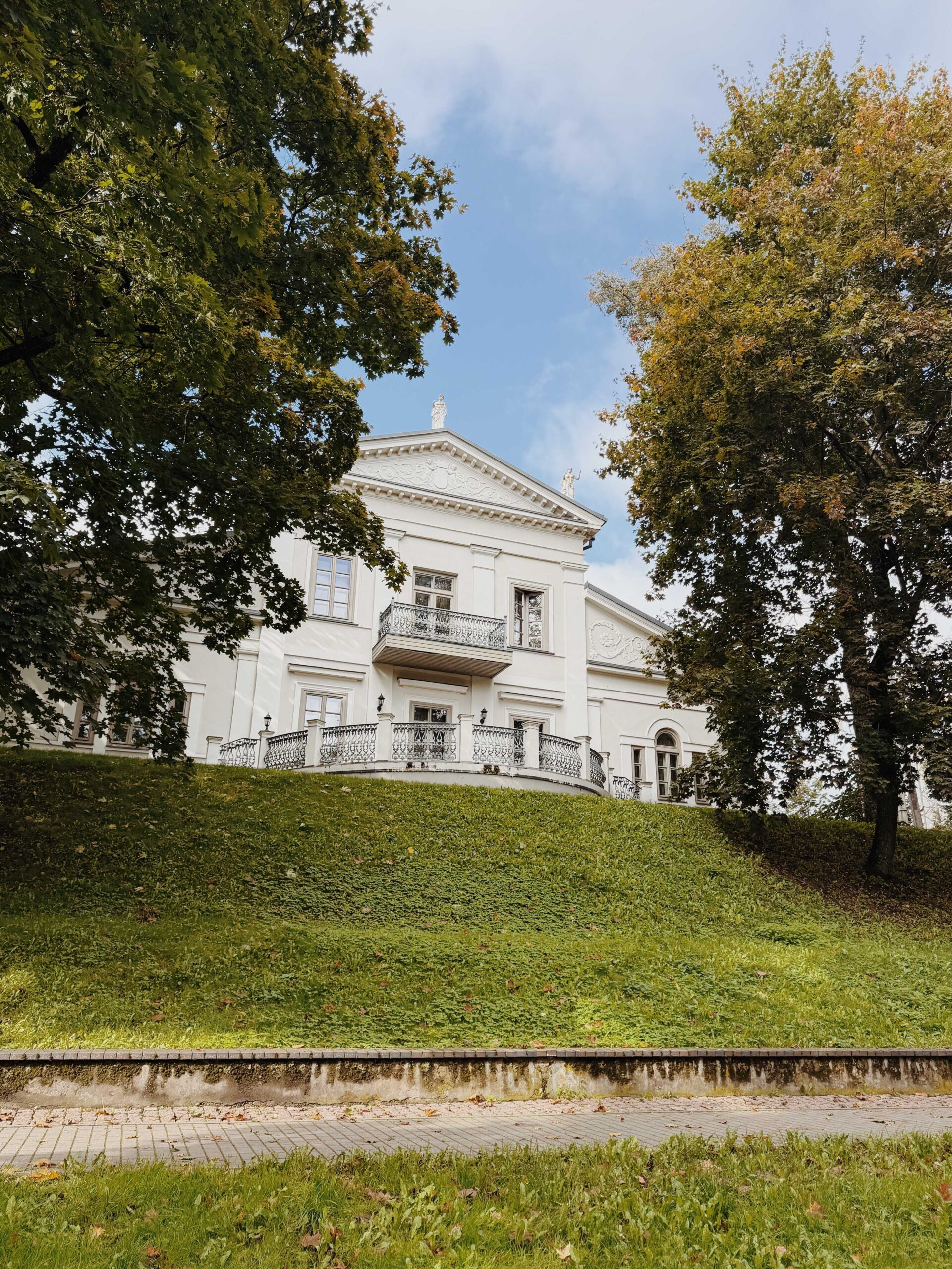
But after the war, the story of Tuskulėnai took a devastating turn. Between 1944 and 1947, the Soviet security services, the NKGB and later the MGB, turned the grounds into a secret site for mass burials. Under cover of darkness, the bodies of executed political prisoners were brought here. They included partisans, members of the resistance, priests, Home Army fighters and ordinary people labelled by the Soviet authorities as anti-Soviet.
The graves were deliberately concealed. Bodies were treated with corrosive chemicals, burial sites were levelled, and the land was replanted. At the time, Tuskulėnai stood on the edge of the city, close enough to be easily reached, yet far enough from the forests where Soviet authorities feared partisan activity.
For decades, the site was closed to the public. The manor became a Soviet institution, and the mass graves remained hidden beneath the grounds. Only after Lithuania regained its independence did researchers begin to investigate what lay beneath the park. Between 1994 and 1996, archaeologists and historians uncovered the remains of at least 724 people.
It was one of the most painful discoveries of independent Lithuania, revealing the scale of Soviet terror taking place only minutes from Cathedral Square.
What followed was a long and sensitive process of deciding how to remember the site. The manor was restored and turned into a museum, now home to exhibitions exploring Soviet repression, resistance and the tragedy of Tuskulėnai. Beside it stands a columbarium containing the remains of those identified and those whose names remain unknown.
The surrounding park has been designed to preserve a sense of stillness and reflection. Paths lead past old trees, the restored manor and the columbarium, inviting visitors to pause and absorb the weight of what happened here. Tuskulėnai is not simply a historical landmark. It is one of the moral landmarks of Vilnius, a reminder that the freedom and peace the city enjoys today came at an immense cost.
Contributor: I am Dovilė, born and raised in Vilnius, where my lifelong fascination with the city began. As a child, I accompanied my father, an amateur guide, on his tours, which inspired my interest in the city’s history. After thirty years working as a graphic designer, I discovered video storytelling as a way to combine my interests in history, design, and storytelling. Today, I share the stories of Vilnius, with a particular interest in the city’s neighbourhoods and their evolution over time. Follow my stories and tours of Vilnius on Facebook or Patreon.
Contents

 Loading...


