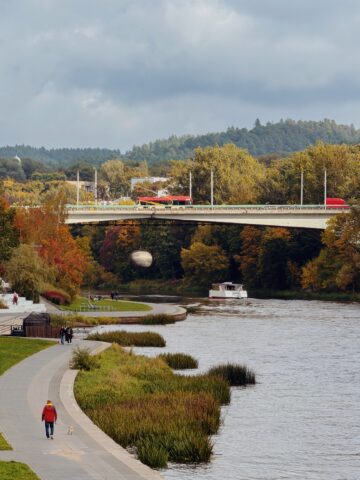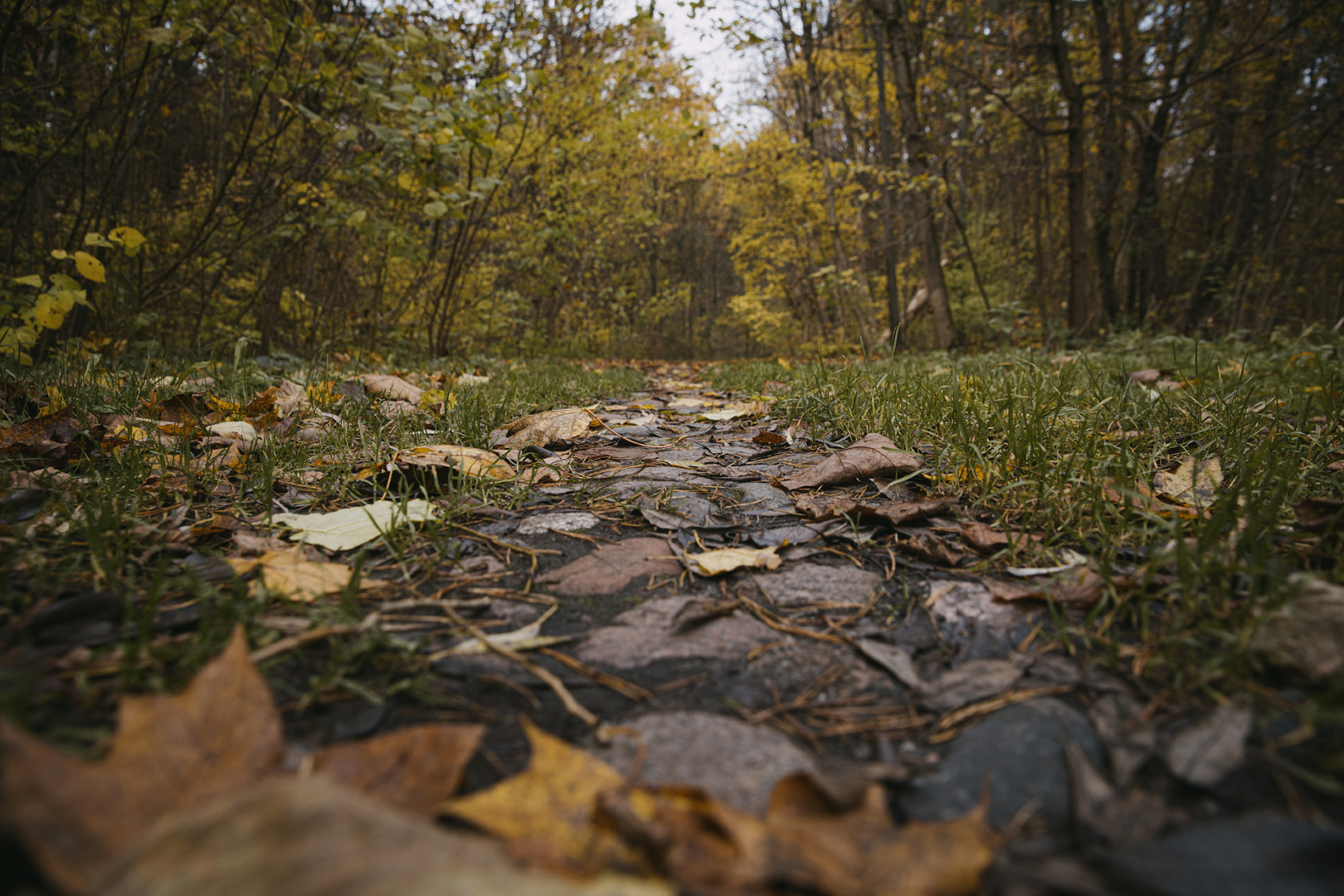
Many Vilnius residents, especially visitors to the city, tend to shrug when they hear the name Paneriai. For some, it brings to mind a grey, industrial district; for others, a remote corner of the city. Most people know the area mainly for the events of the Second World War.
But look a little closer, and you may be surprised by how much history lies here. Paneriai is home to one of Lithuania’s oldest roads, a 19th-century chapel, an impressive railway tunnel and, tucked between factories and forests, one of the city’s most interesting contemporary sculpture parks.
There are many more places worth discovering, but today we’ll introduce you to five of the most interesting ones.
A Section of the Old Vilnius–Kaunas Road
A good place to start exploring Paneriai is a site that served as one of the main western gateways to Vilnius for centuries: a preserved section of the old Vilnius–Kaunas cobblestone road, considered one of the oldest surviving roads in Lithuania. Similar sections can still be found in a few other places across the country, but most of the original cobblestones have either been removed or, more often, buried under concrete. It is good to know that Vilnius still preserves such a remarkable piece of engineering heritage.
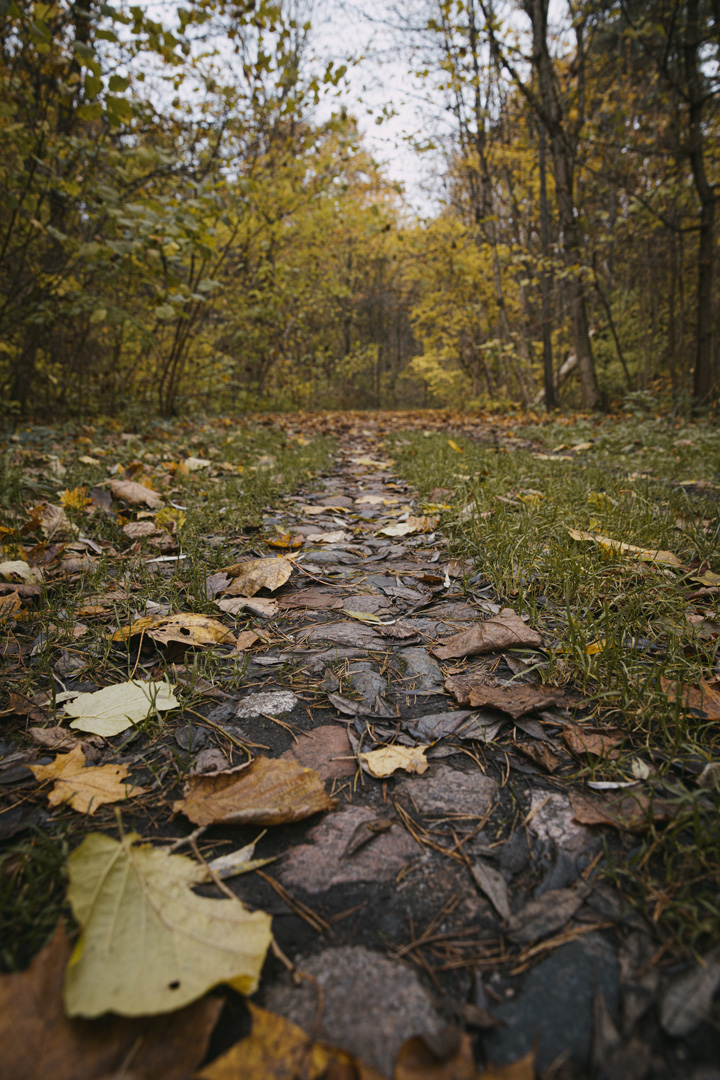
The existing cobblestone road was laid around 1825, but the route itself is much older. It even witnessed the travels of the Grand Dukes of Lithuania. For centuries, merchants, postal carriages, armies and travellers used this road to enter or leave Vilnius.
The Paneriai hills were long considered one of the most difficult stretches of road in the area. The route was steep, winding and so narrow that two carriages could barely pass each other. According to local stories, drivers would fire shots into the air to warn others of their approach and avoid collisions around the bends.
The road was also dangerous because of a gang of 200 robbers led by a man named Pekarskis. He was an educated and cunning man who knew the customs and lifestyles of the nobility. Before becoming a gang leader, he had worked as a valet in several manor houses. The gang operated for years under his leadership. Neither the police nor volunteer law enforcers could stop them. Eventually, the army was sent in and managed to bring the gang to an end. Pekarskis was hanged.
In 1812, Napoleon’s army entered Vilnius along this road and received a ceremonial welcome. Later, during the retreat from Russia, some French soldiers used the same route to withdraw. Local legends still tell of treasures supposedly buried by Napoleon’s troops in the Paneriai hills. Many French soldiers were also buried in the surrounding area.
But this road remembers more than military campaigns. During the Second World War, prisoners from the Vilnius Ghetto were marched along it. Tens of thousands of people began their final journey here, towards the Paneriai Forest. Although the road has changed beyond recognition and is now surrounded by dense forest, information boards in Lithuanian and English tell the story of the wartime tragedy.
The Paneriai Chapel and Monument to the 1831 Uprising Rebels
As you follow the old road uphill, you soon reach one of Paneriai’s most important historical sites: the Paneriai Chapel and, just a few dozen metres away, the memorial to the participants of the 1831 Uprising. The story of the chapel is closely linked to travellers. The Paneriai hills were dangerous, both because of their difficult terrain and the robbers who roamed the area. To seek protection, locals erected a wooden cross at the end of the road. Travellers would pray there for a safe journey and give thanks upon reaching their destination. The wooden cross was eventually replaced by a small chapel, and in the 19th century, the stone Paneriai Chapel was built. A cemetery gradually developed around it and remains in use today.
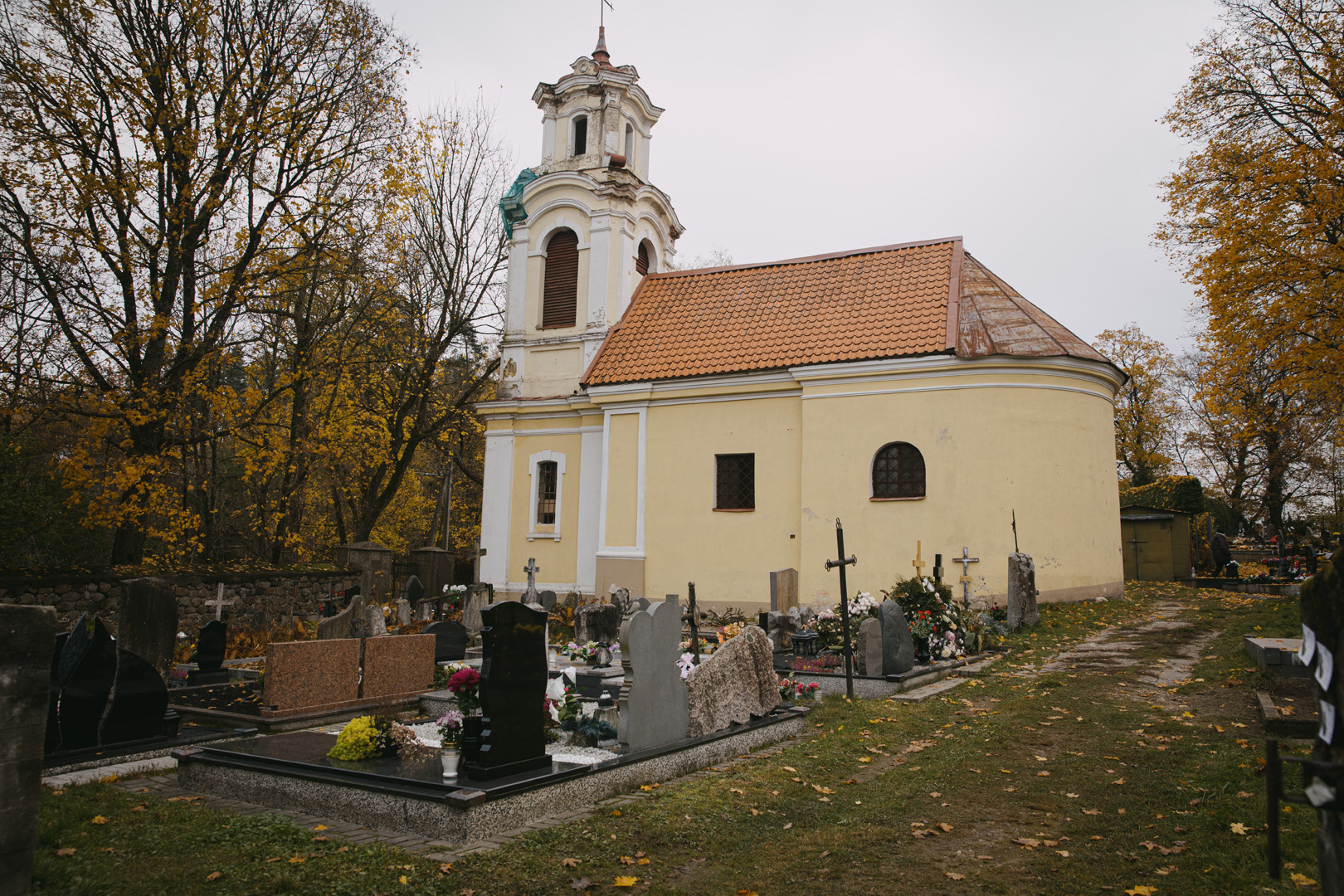
During the Soviet period, the chapel lost its religious function and was used for various purposes, including as a book storage facility. It was returned to the religious community only after Lithuania regained independence. Services are occasionally held here today, but the chapel is usually locked. Still, if you peek through the keyhole, you can see that its interior is well maintained.
Nearby stands a memorial to the participants of the 1831 Uprising. On 19 June 1831, one of the uprising’s most important battles took place in the Paneriai hills. It was led by Brigadier General Antanas Gelgaudas, who had also fought in the Napoleonic Wars. Lithuanian and Polish insurgents attempted to recapture Vilnius from the Russian Imperial Army.
Around 12,000 insurgents took part in the battle, facing 26,000 Russian soldiers. Approximately 600 insurgents were killed and another 600 taken prisoner. The Tsarist army lost 364 soldiers. Unfortunately, the battle was lost. Russian soldiers were buried in the nearby cemetery, while the Lithuanian and Polish fighters were simply buried in an open field, where a trolleybus turning circle now stands nearby.
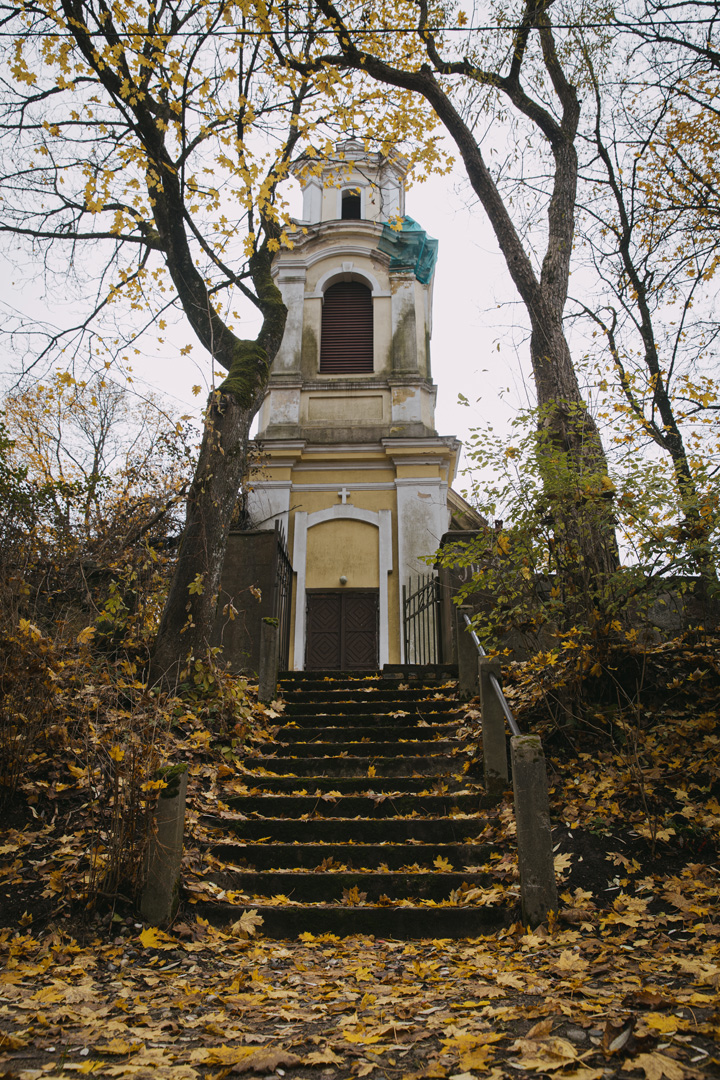
Although the battle ended in defeat, the name Paneriai became part of Lithuania’s history of struggles for freedom. Today, the memorial commemorates not so much the defeat as the determination of those who fought for their country.
While here, it is also worth noticing the old inn next to the chapel. It is one of the oldest surviving buildings in the area, recalling the days when Paneriai was a major stop on the road to Vilnius. Today, it houses residential apartments, and most of its original façade is hidden beneath plaster and paint. Still, a few original exterior details remain, offering a glimpse into its past.
The Old Paneriai Railway Tunnel
If there is one place in Paneriai that deserves the title of the most mysterious, it is undoubtedly the old railway tunnel. First, you need to pass through a small underground passage beneath the railway embankment. At first glance, it looks like an ordinary drainage tunnel, but today it connects two parts of Paneriai that were once separated by the railway. Local residents still use it.
It is said that in the past, when fewer people owned cars, the tunnel was particularly busy. It provided shelter for stray dogs and all sorts of passers-by. Getting through was especially difficult if someone decided to take a motorcycle through it. There are also stairs leading over the embankment, but they are rarely used because of the particularly steep slope and inconvenient location.
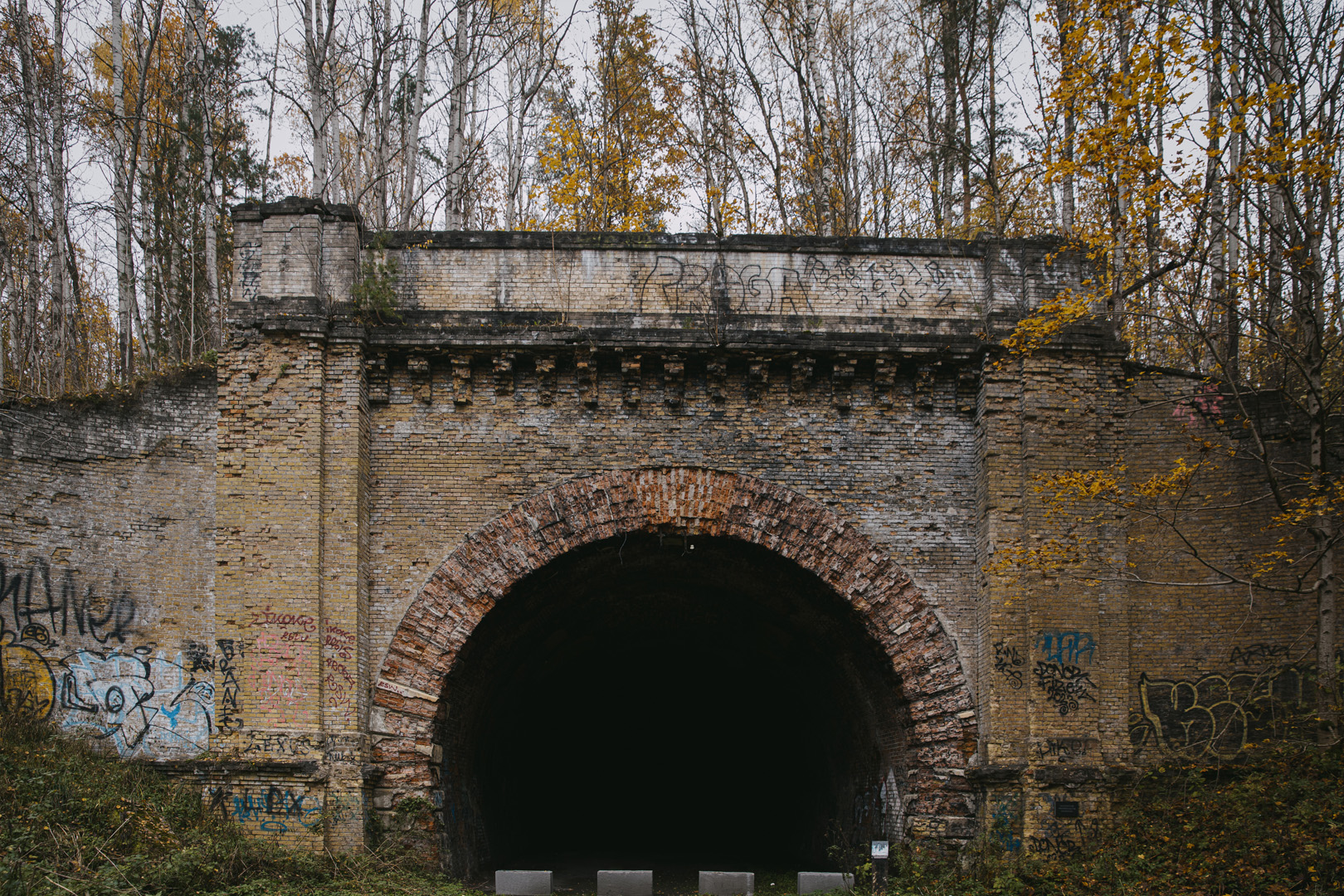
Even the specially established Zuikiai bus stop and bus route have failed to change people’s habit of walking through the tunnel. A few hundred metres further along Zuikių Street, however, you will find a true 19th-century engineering marvel.
The Paneriai Railway Tunnel was built between 1859 and 1861 during the construction of the Saint Petersburg–Warsaw railway. It is 427 metres long, 8 metres wide and approximately 6.4 metres high. It was one of the first railway tunnels not only in Lithuania but also in the entire Russian Empire.
Construction was particularly challenging. The Paneriai hills consist mainly of loose sand, making working conditions dangerous. Everything was excavated by hand, and gunpowder was used for blasting, as dynamite had not yet been invented. Apparently, the sandy ground had not been properly accounted for in the original design, and the tunnel’s structure was not adequately calculated. It lasted only about 100 years. Today, several serious collapses can be seen from above, where the structure has given way.
When the tunnel was inaugurated in 1861, Tsar Alexander II visited Vilnius. According to local stories, he symbolically laid the final brick in the tunnel’s arch. The tunnel may not have been strictly necessary, but the Tsar’s officials wanted to please him, as he was particularly fond of engineering projects.
The tunnel remained in use for almost a century. Towards the end of the Second World War, the Germans planned to blow it up, but the plan was never carried out. In the 1950s, the railway was rerouted along a new line and the old tunnel was closed.
Today, visitors cannot enter the tunnel. Its entrances have been sealed since 2004 to protect the colonies of bats that hibernate inside.
The Paneriai Memorial
The Paneriai Memorial is one of the most important and tragic places of remembrance in Vilnius and Lithuania as a whole.
Before the war, Paneriai was considered a promising resort destination. Its beautiful pine forests, the nearby Neris River and hilly landscape attracted holidaymakers. Plans were drawn up for summer houses, sanatoriums and leisure complexes. Some projects were completed, and wooden houses from that period can still be found in the Paneriai forest. The area even had a name: Jogailaičiai. Unfortunately, history took a tragic turn.
In 1940, the Soviet authorities began building fuel storage facilities in Paneriai and dug several large pits. When the Nazi occupation began, these pits were used for mass executions.
Between 1941 and 1944, around 100,000 people were murdered in Paneriai, most of them (approximately 70,000) Jews from Vilnius and the surrounding areas. Poles, Soviet prisoners of war, Lithuanian resistance members, Roma and people of other nationalities were also killed here.
This is the largest mass killing site in Lithuania and one of the largest Holocaust sites in Eastern Europe. Today, the memorial grounds contain monuments dedicated to different groups of victims, the surviving execution pits, information boards and a museum. Walking among the tall pine trees, it is difficult to comprehend that such a peaceful forest holds such a horrific history.
This is a place worth visiting not for its beauty or entertainment, but to better understand Vilnius’s history and remember the consequences of hatred and totalitarian regimes.
The Paneriai Sculpture Park on Žarijų Street
For many visitors, the final stop on this route comes as an unexpected discovery.
Right next to the industrial part of Paneriai, on Žarijų Street and near the road to Varėna, lies the Paneriai Sculpture Park. At first glance, it looks a little unusual: warehouses, factories and busy traffic surround a meadow where monumental concrete sculptures stand among the trees.
The park was created during the 1985–1986 symposium Sculpture in an Industrial Landscape. The initiative came from sculptor Mindaugas Navakas. The artists wanted to show that art could exist not only in Old Town squares and museums, but also in industrial surroundings. The park features six monumental concrete sculptures. Among them are Mindaugas Navakas’s Barrier, Naglis Nasvytis’s Moonlight, Kęstutis Musteikis’s Morning and Vladas Urbanavičius’s Ribbed, alongside other works.
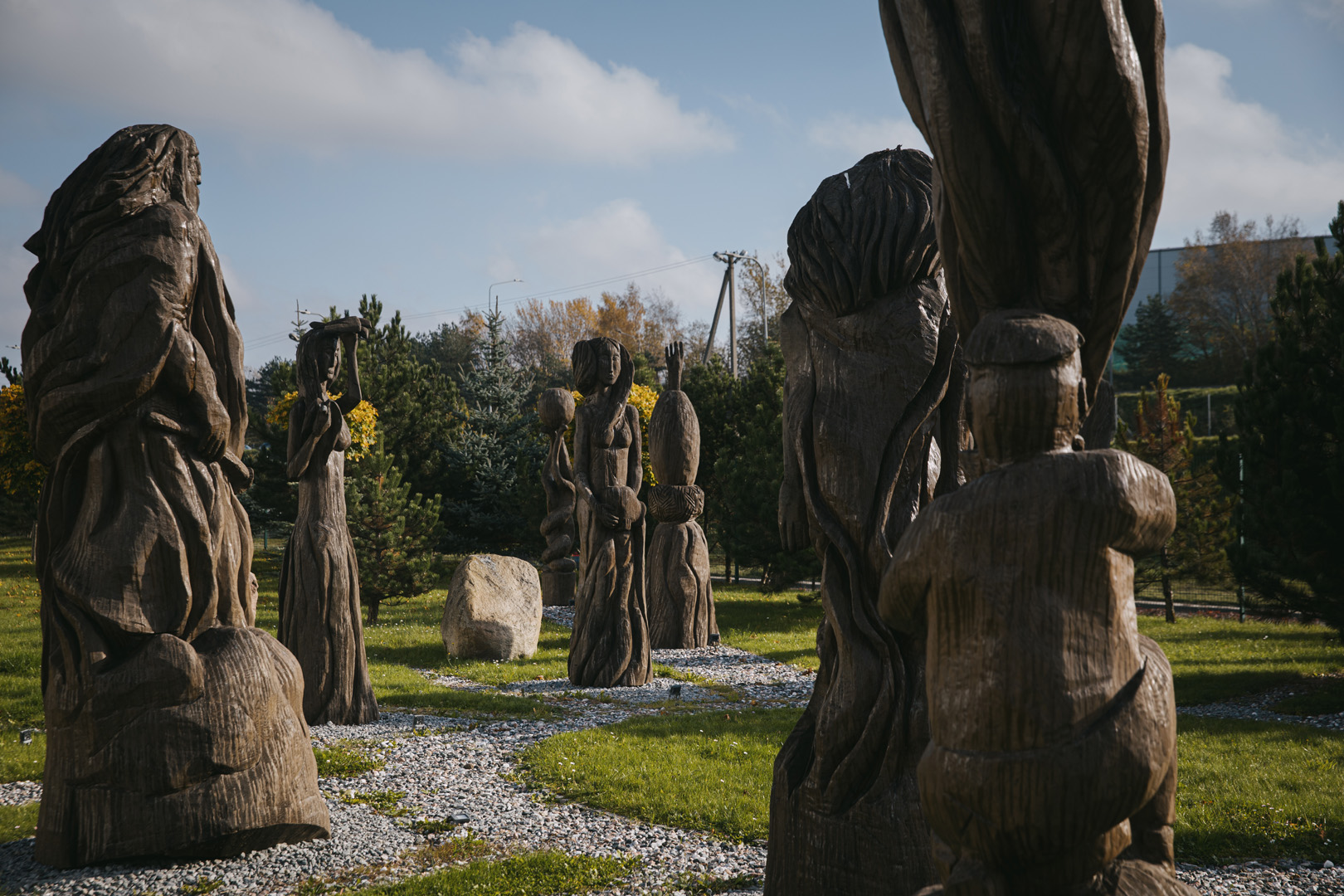
What makes these sculptures particularly interesting is that they were made using the same materials as those used in the nearby reinforced concrete factories at the time. It is a unique dialogue between art and industry.
Today, the park remains one of Vilnius’s least-known art spaces. You are unlikely to encounter many tourists here, making it a pleasant place to walk, take photographs or simply enjoy the unusual combination of industrial landscape and art.
Contents

 Loading...